Museum Accounting Metrics: How to track revenue, forecasting and expenses in real time
Financial management in museums is a complex process that requires precise tools to analyze revenue, control costs, and ensure accounting compliance. Having clear financial metrics and integrated accounting systems allows for well-informed strategic decision-making.
Key Metrics for Museum Accountants
Museum accountants need to generate detailed financial reports in real time. Some of the most important metrics include
1. Revenue and Sales
It is essential to visualize revenue broken down by sources, such as ticket sales, memberships, donations, the museum store, and space rentals. This information helps museums identify their most profitable areas and adjust their strategies accordingly.

Analyzing sales trends over time and distinguishing between online and in-person transactions also helps optimize sales channels.
2. Accounts Receivable and Payments
Accounts receivable represent outstanding revenue that can impact cash flow. Monitoring overdue payments and ensuring they are collected on time is crucial. Did you receive donations that you were expecting? Are the promised pledges being collected? Did you receive what you forecasted for the month in Renewals? How many people didn’t renew?

Accrual accounting allows revenue to be recorded when earned, distinguishing between recognized and deferred income to maintain more accurate financial records.
3. Revenue Forecasting
Leveraging Salesforce Opportunities and Rental Events/Groups as part of a forecasting strategy offers organizations a structured, real-time view into future revenue streams. By tracking donations, memberships, grants, and especially pledge commitments as Opportunities, organizations can:
Categorize income by stage, such as "Prospecting," "Pledged," or "Closed-Won," to project expected cash flow with greater accuracy.
Monitor forecasted vs actual revenue, supporting budget planning, grant reporting, and financial health monitoring.
Use reporting to segment forecast data by campaign, donor type, or fiscal period.
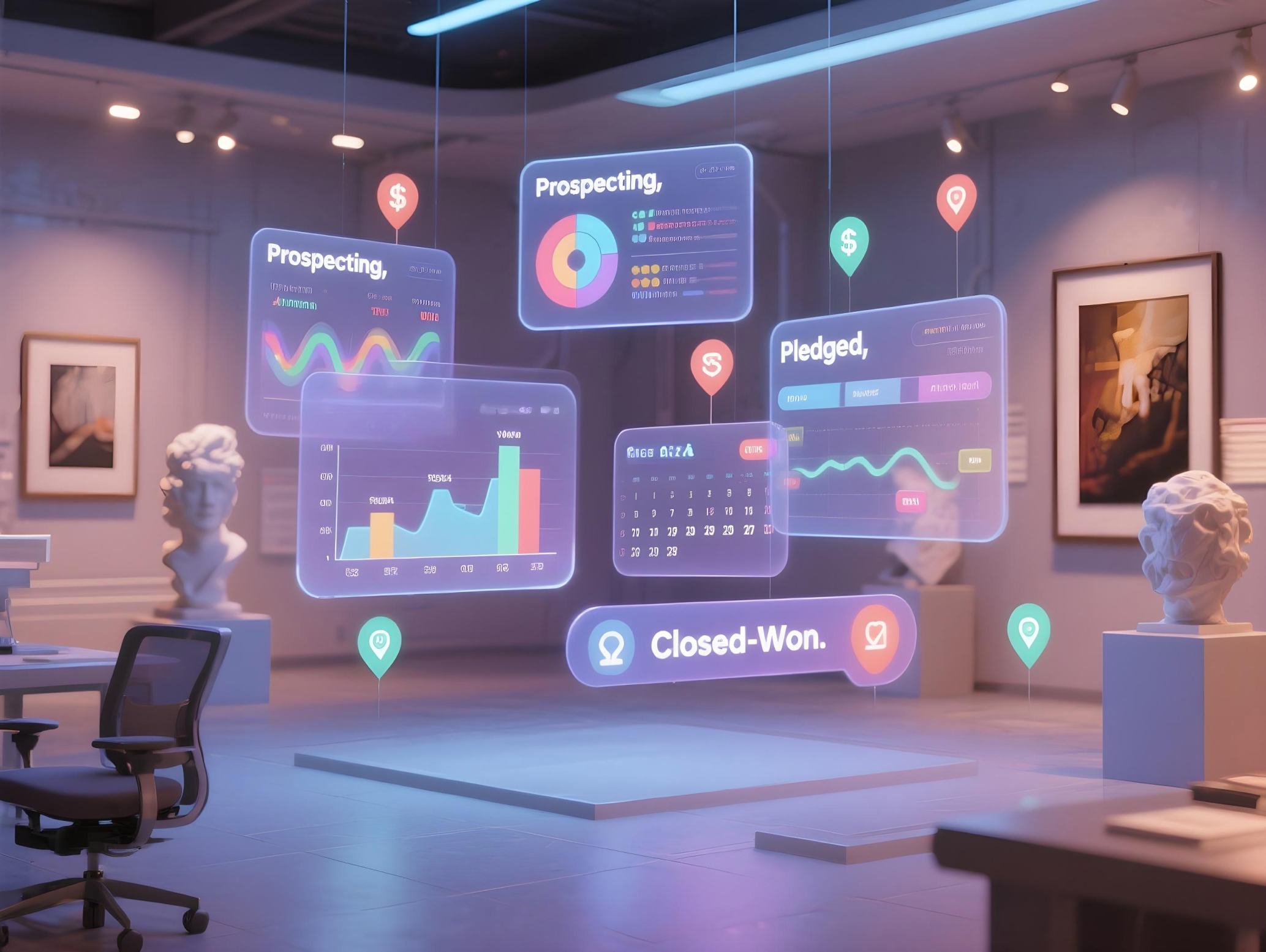
For instance, a pledge marked as "Pledged" represents anticipated revenue, allowing it to be included in forward-looking financial dashboards while remaining distinct from received funds.
Rental events and Group bookings with payment commitments can also be tracked, giving a clearer view of expected income across the fiscal year. This enables leadership to model revenue scenarios, understand pipeline performance, and make informed financial decisions.
4. Donations and Memberships
Donations and membership programs are key funding sources for museums. Tracking income from these programs helps analyze member retention rates and evaluate the effectiveness of engagement strategies. Comparing renewals with new memberships is also valuable for understanding the growth of the museum's support community

5. Ticketing and Visitation
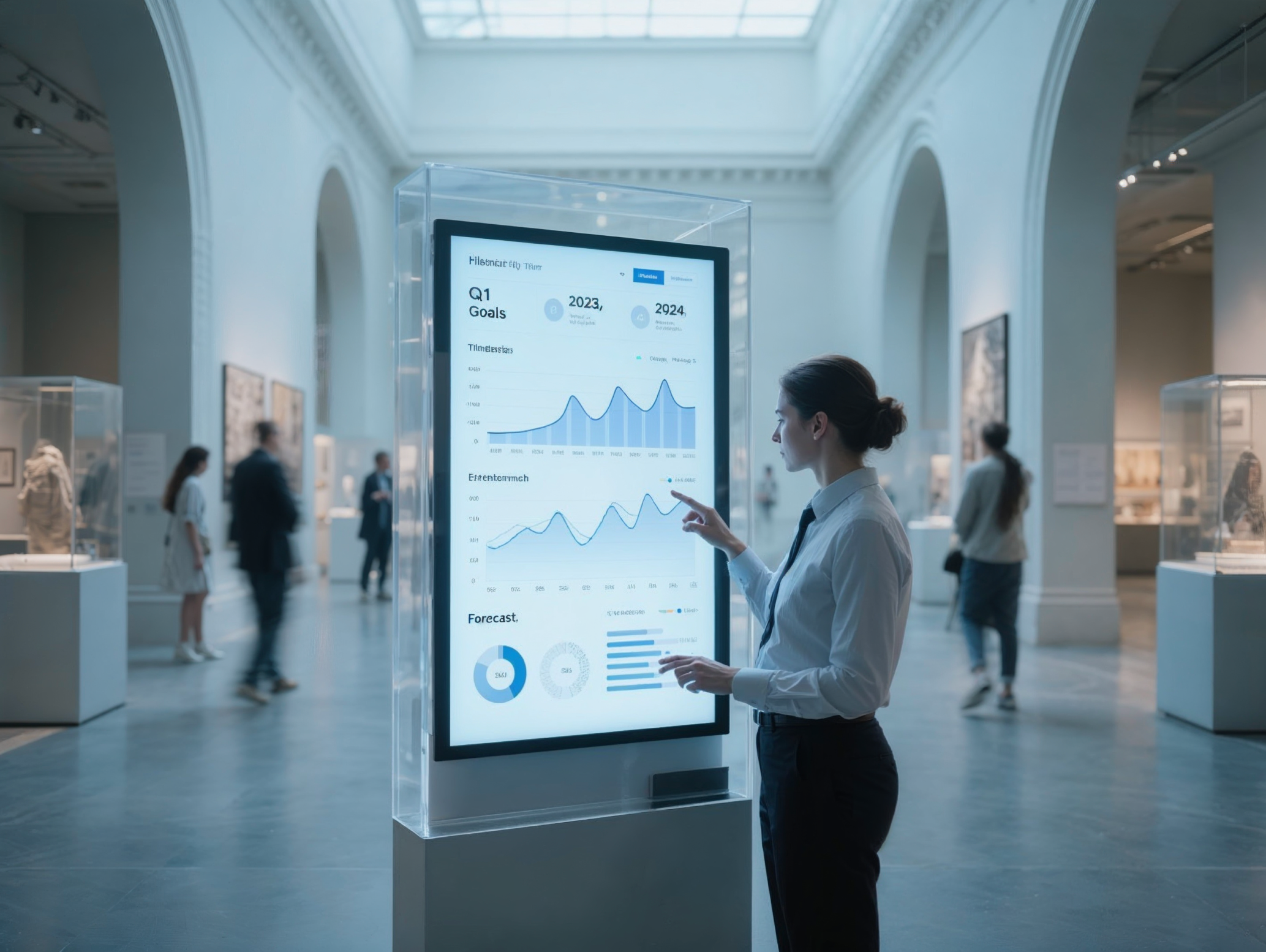
You have the historical data you need for forecasting purposes. From a financial perspective, you can take a look at what this month looked like in the last couple of years and see how you are doing. You can work with programming to establish growth goals per quarter, and see if resources are needed to make them happen
6. Shop
The shop is a good source of revenue for many cultural institutions. People want to go to the shop to find that item that will become a reminder of the experience or a gift to someone else.

You know how much they have been doing quarter over quarter, which are the seasons that bring more revenue, as well as the items that sell the best. Work with your Shop team to see how you can get that 10% improvement in the operation
7. Cost and Expense Management
Controlling costs is essential for financial sustainability. Evaluating the relationship between revenue and operating expenses helps assess profitability. Additionally, measuring the return on investment for activities such as events and fundraising campaigns ensures that budgets are allocated effectively based on performance results.

8. Audit and Compliance Reports
To ensure transparency and comply with accounting regulations, generating audit reports and financial reconciliations is necessary. Integrating revenue and expense data with external accounting platforms allows for accurate record-keeping, making audits easier and improving financial management.

Integrations with QuickBooks and Sage: Real-Time Financial Synchronization
Integrating CRM and operations platforms with accounting systems like QuickBooks and Sage allows organizations to achieve real-time financial synchronization and significantly enhance operational efficiency. Key benefits include:
Automatic syncing of invoices and journal entries, ensuring accounting records reflect real-time activity across departments.
Reduction in manual data entry, decreasing the likelihood of human error, and minimizing reconciliation headaches.
Accelerated month-end closing and simplified audits, with accurate data flowing directly from operational platforms to financial systems.

Enhancing Financial Management with Veevart
Managing a museum's finances efficiently requires the right tools and integrations. Veevart provides advanced solutions that help museums track key financial metrics, optimize revenue streams, and ensure transparency in accounting. By integrating with QuickBooks and Sage, the platform streamlines processes, reduces errors, and facilitates strategic decision-making. With precise analysis and automation, museums can dedicate more resources to their core mission: preserving and sharing art and culture with the world.
If your museum is looking for a comprehensive accounting solution, discover how Veevart can transform your financial management today.