Cybersecurity for Museums: What Happens When You Ignore Digital Security
Because trust isn’t just earned through experiences, it’s maintained through security.
When someone visits your institution, buys a ticket, makes a donation, or becomes a member, they’re doing more than completing a transaction.
They’re saying, "I trust you."
They trust your mission, your team, and what you stand for.
But also — often without realizing it — they’re trusting that you’ll protect something invisible yet incredibly valuable: their personal data.
That trust isn’t sealed with a form or guaranteed by a password.
It’s built through strategic decisions, solid practices, well-implemented technology, and, above all, the awareness that protecting data is part of your institution’s impact.
In hac habitasse platea dictumst. Pellentesque habitant morbi tristique senectus et netus et malesuada fames ac turpis egestas. Nam eu nunc non augue tincidunt suscipit. Suspendisse potenti. Aliquam erat volutpat. Integer vel turpis sed purus scelerisque euismod.
More Data, More Threats
Museums, galleries, and cultural centers are collecting more data than ever: visitation patterns, donation history, educational interests, payment methods, household affiliations, and more. This data helps improve services, personalize communication, and increase institutional impact.
However, this wealth of information also makes institutions prime targets for increasingly sophisticated cyberattacks. According to Cybersecurity Ventures 2024, the global cost of cybercrime is expected to reach $10.5 trillion annually by 2025.
And nonprofits, often less technologically equipped than the private sector, are among the most vulnerable.
A Wake-Up Call for the Sector
In recent years, cybersecurity incidents across the nonprofit and cultural sectors have made one thing clear:
Not even the most trusted platforms or institutions are immune to risk.
The key difference lies in how organizations take responsibility and manage their own role in safeguarding data.
Ignoring the problem doesn’t make it go away — but building internal awareness and robust processes can make all the difference.
Security Is a Shared Responsibility
Salesforce, the platform on which Veevart is built, acknowledges this reality through its Shared Responsibility Model.
While Salesforce manages the underlying infrastructure — including servers, encryption, and security layers — institutions must take proactive steps to configure, restrict, and monitor data access internally.
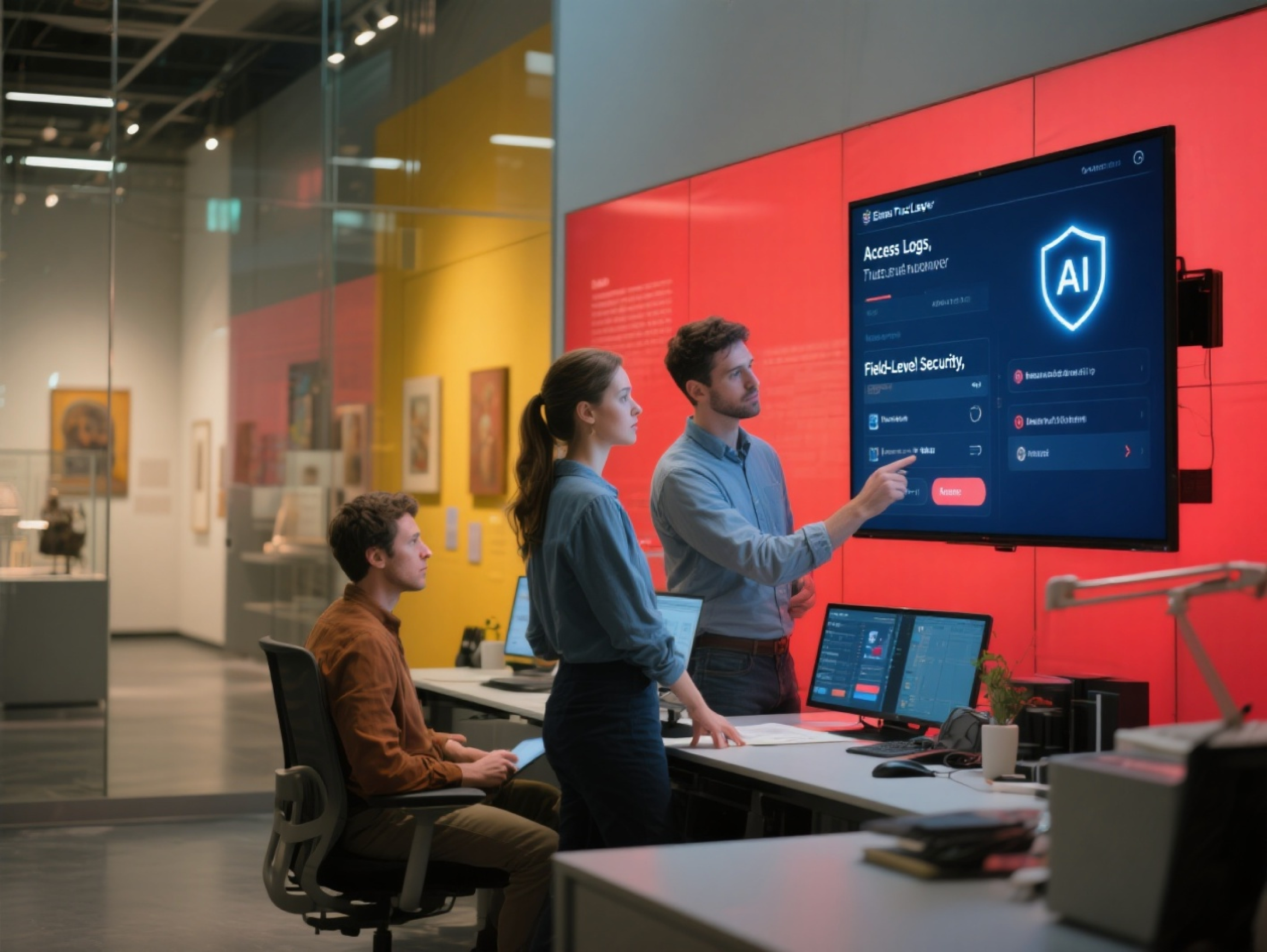
Salesforce offers powerful tools to support this effort, including:
Real-Time Event Monitoring, which detects unusual activity and unauthorized access.
Data Masking and Field-Level Security, to prevent unnecessary exposure of sensitive data.
Einstein Trust Layer, an AI-powered protection system that helps prevent misuse.
These tools, however, only reach their full potential when paired with strong internal policies and well-defined processes.
What Can Cultural Institutions Do?
At Veevart, we work with cultural institutions that understand technology must be not only powerful but also secure.
Our solution, built 100% on Salesforce, includes configurations and processes specifically designed to protect the data of members, donors, and visitors.
At Veevart, we work with cultural institutions that understand technology must be not only powerful but also secure.
Our solution, built 100% on Salesforce, includes configurations and processes specifically designed to protect the data of members, donors, and visitors.
Here are some of the best practices we recommend:
Role-based permission management, to ensure that only authorized personnel access sensitive information.
Mandatory multi-factor authentication (MFA) for all administrative users.
Activity logging and regular audits, to identify and address anomalies early.
Separation of financial and personal data, enabled through secure integrations like Adyen.
Ongoing internal training, because building a culture of security starts with team awareness.
Veevart also allows institutions to automate operations without compromising data security, thanks to custom settings, protected fields, and automation rules tailored to the cultural sector.
Data Is Also Part of Your Cultural Heritage
At the CIO for Good Summit, Kelly Kitchen, VP of Education at Salesforce, said it best:
“Don’t let data get in the way of doing good.”
We’d take it a step further:
Don’t let the lack of data security discredit all the good your institution does.
Your organization doesn’t just preserve art, stories, and memory.
It also holds something just as valuable — the trust of a community.
Each member, donor, and visitor who shares their information does so with the expectation that you’ll treat it with the same care you give your collection.
What Now?
If you want to ensure that your institution’s data is truly protected — without sacrificing agility or personalization — let’s talk.
At Veevart, we believe technology should empower you, not expose you.
Request a demo or a security audit of your current configuration today.
Your mission is too important to leave to chance.