Empowering Museum Teams with Centralized Systems

Museum teams have always performed minor miracles with whatever they had on hand. But growth compounds differently than most people expect, more programs mean more touchpoints, more exhibitions mean more data streams, more digital offerings mean more platforms that don't shake hands with each other. Staff end up switching between ticketing interfaces, membership portals, fundraising databases, retail terminals, and spreadsheets that somehow migrated to three different departments without anyone noticing.
Each system might function. That's not the problem.
The problem is they exist in parallel universes.
Centralizing museum operations isn't some tidy consolidation project. It's about stopping the constant translation work like the manual stitching, the context-switching, the "wait, which version is current?" moments that burn through focus before the actual work even starts. Teams need to see what's happening across the institution and coordinate without friction.
That's what centralization actually buys you.
This blog explores why centralized systems are reshaping internal collaboration and why unified museum management platforms are becoming the new standard.
The Operational Reality in Most Museums Today
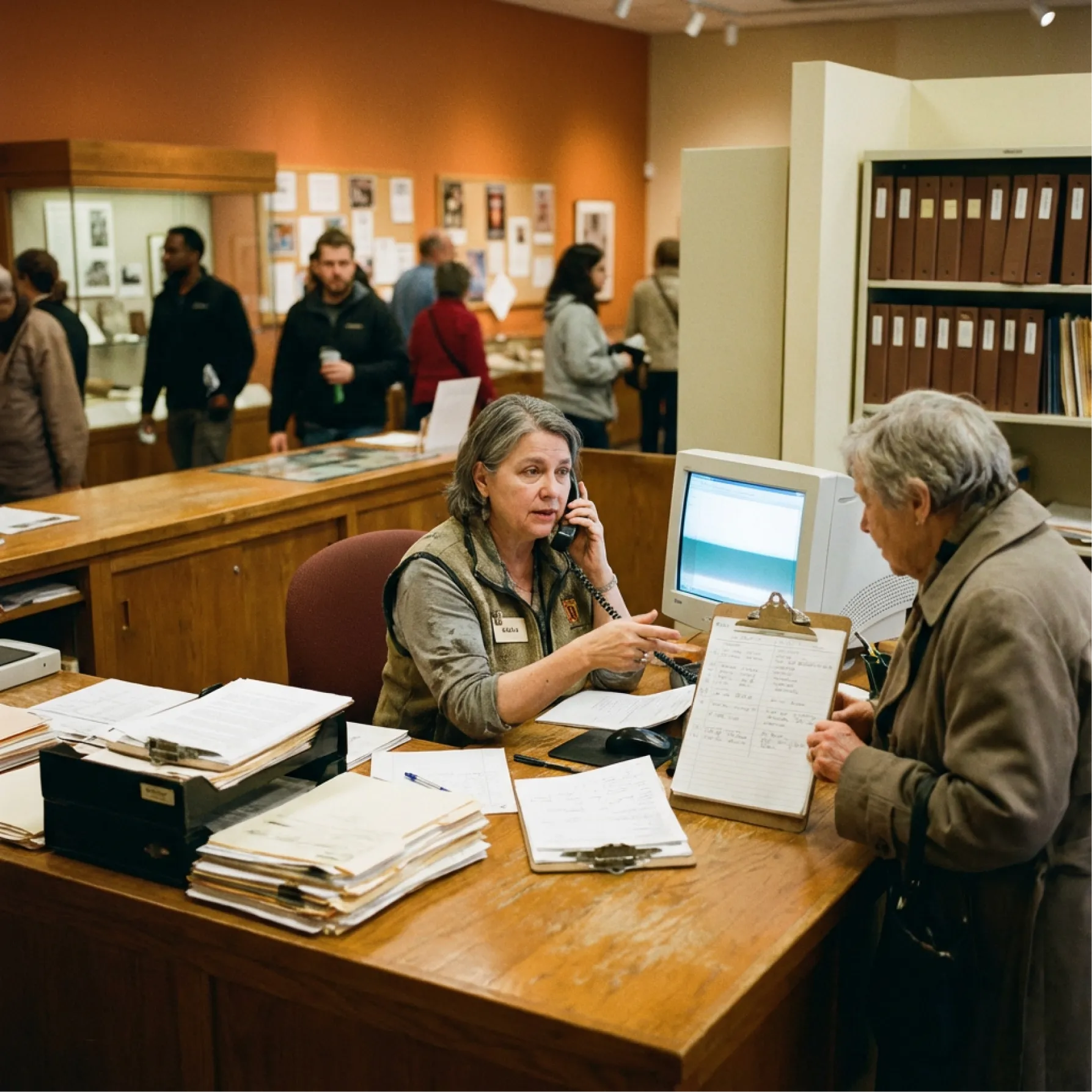
Walk into almost any museum back office and you’ll notice something familiar.
Teams are doing good work. Often great work. They’re just doing it with limited visibility.
Admissions tracks visitor volume in one system.Membership lives somewhere else. Fundraising updates a CRM that development understands, but program teams never see. Retail operates independently.Education relies on separate tools for classes and camps.
Everyone is working with partial information.
Most of the time, the issue isn’t effort. Staff are already stretched and committed.
The real challenge is fragmentation and how quietly it makes coordination harder than it needs to be.
When each department only sees its own slice of the operation, alignment becomes work instead of momentum.
What Centralized Systems Improve Immediately
1. Shared context across departments
When ticketing shares a database with membership, program sign-ups, retail transactions, and donor records, silos dissolve. One visitor. One record. Real-time sync across every department that touches them.
That eliminates the back-and-forth:
“Which version is correct?”
“Who updated this last?”
2. Fewer communication breakdowns
Teams no longer rely on emailed spreadsheets or manual status updates. Information lives in one place, and it stays current.
3. Clearer workflows
A unified system brings consistency to how renewals, donations, ticket sales, event registrations, and reporting are handled. New processes don’t have to be relearned department by department.
That consistency reduces training time and hhelps new staff get up to speed faster.
4. Better decision-making
Development teams can see which programs tend to generate donor interest.
Education teams understand which families return for classes.
When information is easier to access, decisions tend to get simpler and over time, that shows up in the visitor experience.
How Fragmented Systems Hold Teams Back
Most museums recognize the symptoms, even if they don’t immediately label them as fragmentation:
duplicate records across departments
reports that don’t quite line up
staff double-checking numbers before acting
None of this means teams aren’t collaborating or trying to improve.
It usually means the underlying infrastructure wasn’t designed to support how museums operate today.
People want to work together. Their systems just don’t always make it easy.
What a Centralized Museum Management Platform Makes Possible
When a museum moves to a unified platform, one system supporting ticketing, membership, fundraising, events, retail, and even collections; the organization starts to operate with more clarity.
A few things tend to shift quickly:
1. Everyone works from the same record
If a visitor buys a ticket online and makes a small donation onsite, that activity is visible across teams, from admissions to development.
2. Workloads become more predictable
As data flows automatically, staff spend less time cleaning spreadsheets and more time planning programs, cultivating donors, and improving visitor services.
3. Training becomes easier
New hires learn one system instead of four.
During busy seasons, that time savings adds up faster than most teams expect.
4. Cross-department collaboration improves naturally
Teams can finally see how their work connects to the bigger picture; for example, how school tours influence membership interest or how exhibitions spark donor engagement.
Instead of “Can you send me the updated list?” the conversation becomes,
“Here’s what we’re seeing and here’s how we can respond.”
How Veevart Strengthens Team Collaboration
Veevart’s architecture was built with museum operations at the center. By connecting admissions, membership, fundraising, programs, retail, and collections into one museum-native system, it gives staff something they rarely have: a true single source of truth.
This changes daily work in practical ways:
Admissions sees membership eligibility instantly
Development can identify donor prospects based on real visitor activity
Frontline teams have context without switching tools
Education staff can track families across camps, classes, and donations
Retail purchases sync with constituent records for better segmentation
Leadership gets reports that reflect the entire visitor lifecycle, not siloed pieces
Nothing about this requires teams to “work harder.”
It simply removes the friction that slows them down.
Centralization gives museums operational maturity without increasing staff workload.
Closing Thought
Museums run on collaboration.
Exhibitions, programs, fundraising, and visitor services all depend on teams working in sync. When systems are fragmented, collaboration becomes a constant uphill effort.
Centralized museum management platforms don’t just streamline operations. Staff get what matters most: clarity on what's real, confidence to act on it, coordination that doesn't require constant translation.
Museums modernizing operations aren't making technology choices. They're making operational ones. The system unification conversation? It's not about software anymore. It's about whether teams can function without constantly working around their tools.