From Blueprint to Bloom: How Jamie Maslyn Larson FASLA Is Transforming Tohono Chul Botanical Gardens
Cultural Animals: Museum Leadership Lab | Episode Recap
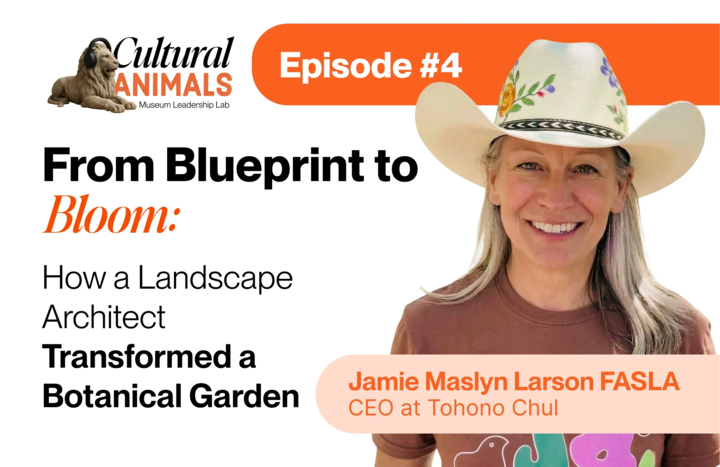
What happens when a landscape architect with 25 years of experience designing some of the most ambitious public spaces in the world trades the global stage for a 49-acre desert garden just down the street from her house in Tucson, Arizona? If you're Jamie Maslyn Larson FASLA, President and CEO of Tohono Chul Botanical Gardens, it turns out you double your visitation, triple your family attendance, and reignite a community institution's sense of purpose in just a few years.
Watch on YouTube→
Listen and subscribe to the full Cultural Animals: Museum Leadership Lab podcast at:
Apple Podcast →
Spotify →
In our latest episode of Cultural Animals: Museum Leadership Lab, Jamie sat down with host Antonio Velasco for a wide-ranging conversation about design thinking, community access, creative risk-taking, and what it really means to return an organization to its roots.
A Career Built Around Connecting People to Nature
Jamie's path to Tohono Chul is anything but conventional. She grew up in a carefully planned suburban community in Phoenix (think manicured boulevards, orange trees, and turf grass) where the natural desert was essentially nowhere to be found. It wasn't until she went to college in Flagstaff at 7,000 feet, surrounded by pine trees and outdoorsy friends who dragged her on hikes, that she experienced what nature could do to a person.
"I just had this moment where I was opened up to a whole new world of how nature can make you feel great," she told us.
That revelation sent her toward landscape architecture, with a singular mission: connect people to nature, especially in urban spaces, and make that connection available to everyone regardless of income or background. Over 25 years, she worked on projects ranging from small urban parks to thousand-acre botanic garden master plans, eventually landing at Bjarke Ingels Group in New York City, where she worked on projects across the globe.
But the higher she climbed, the further she got from the work and from the people that drove her.
Why Tucson? Why Tohono Chul?
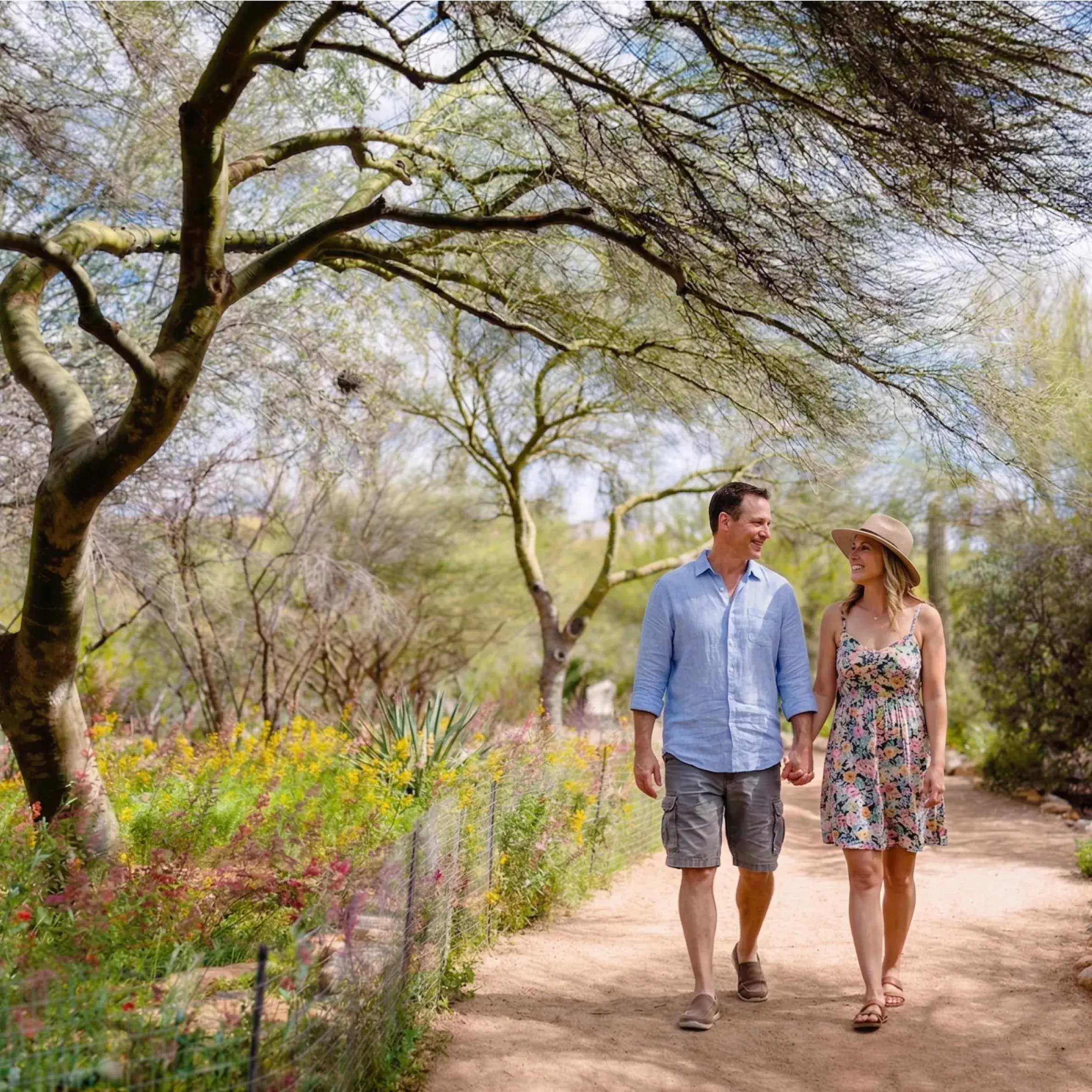
When the pandemic hit, Jamie and her husband reassessed everything. They moved to Tucson to be closer to family, not entirely sure what came next. Eight months later, the CEO role at Tohono Chul (a 49-acre desert garden a five-minute walk from her front door) came open.
She was candid with the board during her interview: she had zero nonprofit management experience. But what she did have was a landscape architect's eye, and she'd been walking the gardens regularly. She could see the decaying infrastructure, the confusing wayfinding, the missed opportunities for community connection. She could also see that the garden's audience skewed heavily toward older, wealthier visitors, while Tucson itself is one of the most beautifully diverse cities in the American Southwest.
Her pitch was direct: "If you want a nonprofit manager, it's not me. But if you want somebody who's going to transform the gardens and the experience here and bring in new audiences, I'm your person."
They hired her.
Returning to Roots, Literally
One of Jamie's first priorities was developing a new strategic plan anchored in what she calls "returning to roots." She immersed herself in the history of the garden's founders, Richard and Jean Wilson, who had donated their private Sonoran Desert land rather than leaving it to their children, because they believed in sharing it with everyone.
The Wilsons were environmentalists who celebrated Southern Arizona arts and, crucially, had always invited the public onto their land, even before the garden officially opened. They wanted people to come, spend a few hours, and maybe learn something.
"The nexus of their environmental attitude, their celebration of cultural arts, and the invitation to let everyone in: that's what I meant by returning to our roots," Jamie explained.
That philosophy shaped every decision that followed. The garden assessed and overhauled its irrigation systems to stop wasting water. It came into compliance with International Dark Sky standards. And it launched a series of bold new programs designed to welcome audiences that the garden had never meaningfully served before.
Chillin at the Chul: The Experiment That Changed Everything
If there's a single initiative that captures Jamie's approach to leadership, it might be "Chillin at the Chul," the summer evening programming series she launched in her first year that became an overnight phenomenon.
Her logic was simple: she grew up in Phoenix. She knew that summer in the desert means staying inside all day and going out at night. And she knew that Tohono Chul, with its mature tree canopy, runs about 10 degrees cooler than the surrounding city. Why not invite people in?
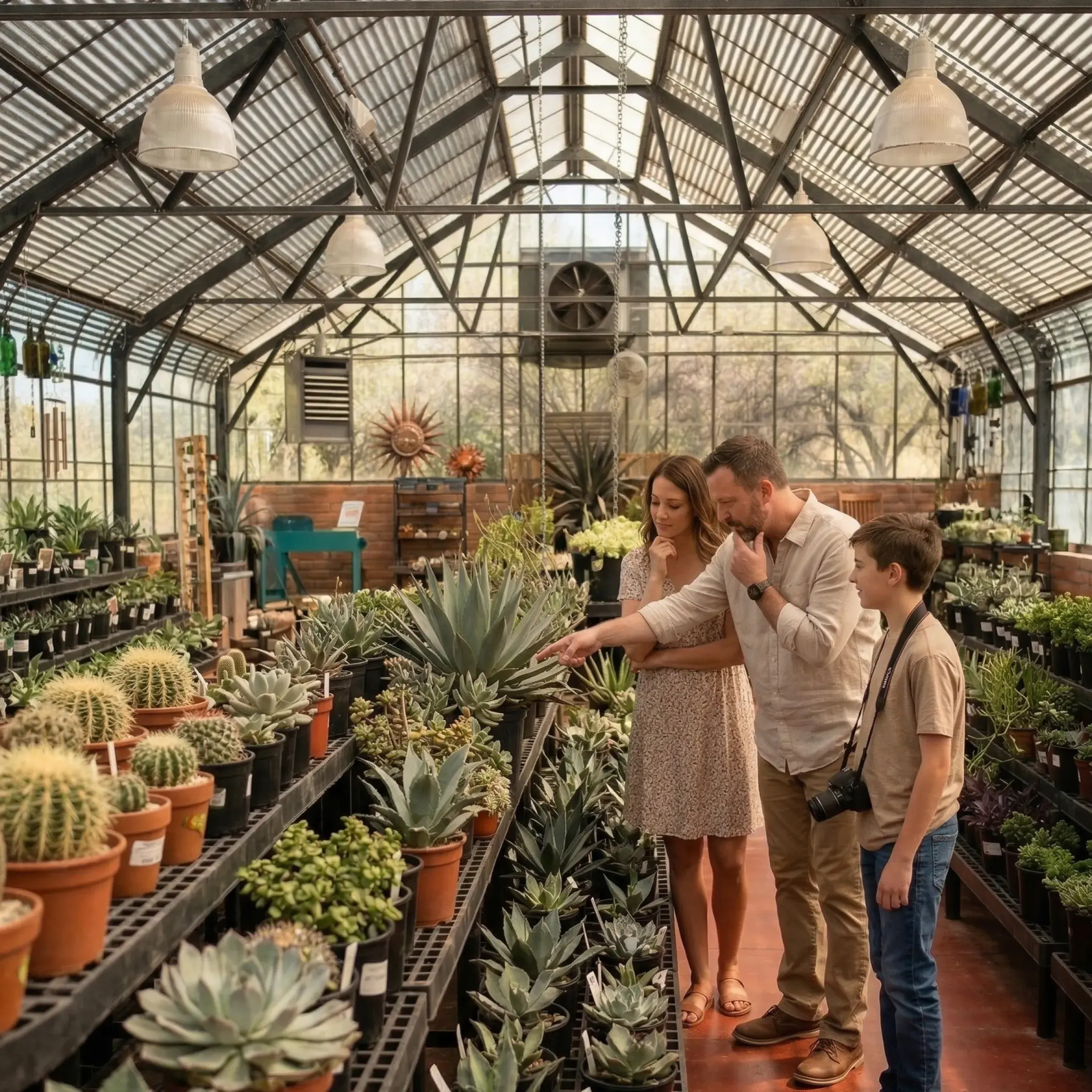
The garden hired local bands and DJs, fired up a grill for Sonoran hot dogs and tacos, and opened the gates on Friday and Saturday evenings from 6 to 9 p.m. On Saturdays, they partnered with the Children's Museum of Tucson for kids' programming.
Her marketing team was skeptical. "Nobody's gonna come. It's too hot," she recalls being told.
Nearly 12,000 people came that first summer, across 12 weeks, with some nights drawing 400 to 500 visitors. More importantly, the crowds looked like Tucson: families with strollers, teenagers, seniors, people of every background. A woman approached Jamie one evening, looked her in the eyes, and said, "Thank you for doing this for us."
"She meant us as everybody that was there," Jamie told us. "I was like, it's my pleasure."
The numbers tell the rest of the story: Tohono Chul grew visitors by almost double the following year, with children's attendance nearly tripling.
Design Thinking as a Leadership Philosophy
Throughout our conversation, a through line emerged: Jamie leads the way she designs. She's comfortable with experimentation, iteration, and the reality that you can never fully predict how people will use a space (or a program) until they're actually in it.
"Everything is an experiment, and you learn from it, and you evolve," she said. "I don't have fear around trying new things at all."
That mindset extended to how she reorganized her team. When she arrived, departments operated in silos: retail did retail, arts did arts, engagement did engagement. But from a guest's perspective, it all reads as one experience. She pushed for cross-departmental collaboration, drawing on her background in design where every discipline has to integrate.
It was confusing at first, she admitted. But when the team saw the results (the visitor numbers, the energy in the garden, the earned revenue) the buy-in followed naturally.
On Boards, Donors, and Earned Revenue
Running a nonprofit required a genuine learning curve for Jamie, particularly around fundraising and donor relationships. But her design background gave her one key advantage: she thinks in terms of visible impact. She wants donors to be able to see the transformation their support makes possible.
"I love the phrase 'the proof is in the pudding,'" she told us. "I want people to visually see the impact they're having."
She's also brought a developer's eye to earned revenue, understanding that shops, restaurants, venue rentals, and events aren't just nice-to-haves but structural supports for the institution's mission. With government grants increasingly unreliable, building diversified earned revenue is how gardens like Tohono Chul achieve long-term sustainability.
On the board side, Jamie inherited a group that skewed older and homogenous and worked over time to recruit members who reflect the full diversity of Tucson, including a member of the Pascua Yaqui Tribe and multiple Hispanic board members. She credits her first board chair, an artist who gave her room to experiment and lead creatively, with making much of the transformation possible.
What Makes a Great Botanical Garden?
We asked Jamie about her favorite gardens, large and small. For large, she pointed immediately to Longwood Gardens in southeastern Pennsylvania, where she worked on the institution's first-ever master plan. She spoke warmly about CEO Paul Redman, who she described as a true mentor: someone who restored historic structures, dramatically expanded audiences, and transformed the experience, all while honoring the personal vision of the garden's founder.
For small, she chose the (The Jardín Etnobotánico de Oaxaca), Mexico a former historic site in the center of the city where the plants themselves are the entire point. No restaurant, no gift shop (that she can recall), no signage whatsoever. You either wander through it on your own terms or take a docent tour. "I loved it so much," she said simply.
As for Tohono Chul itself, she envisions it becoming Tucson's great third place a democratic space where you can leave your cares behind, share a glass of wine or a bite to eat, and let kids run free without a scheduled activity in sight.
"When did kids get to just run around and be free?" she asked. "We wanna be that place for kids, but for all ages."
The Takeaway
What makes Jamie Maslyn Larson's story so resonant isn't just the impressive metrics it's the clarity of her conviction that great public spaces should serve everyone, and that institutions don't have to choose between honoring their past and boldly reimagining their future.
With the support of modern tools like Veevart, institutions such as Tohono Chul can better connect operations, visitor experiences, and long-term growth without losing sight of their mission.
She walked into Tohono Chul with no nonprofit experience, a list of physical improvements she wanted to make, and an unwavering belief that the community would show up if you gave them a real reason to. She was right.
If you haven't visited Tohono Chul Botanical Gardens, it might be time to plan a trip especially on a summer evening. Just follow the music.