From Dumpster Diving to $100M: How Vince Kadlubek Built Meow Wolf into an Immersive Art Powerhouse
What do you get when a group of broke twenty-somethings in Santa Fe decide their city's cultural identity has no room for them?
One of the most innovative immersive entertainment companies in the world.
Vince Kadlubek, co-founder and creative visionary behind Meow Wolf, joined Antonio Velasco on the Cultural Animals: Museum Leadership Lab podcast for a conversation that was equal parts startup story, leadership lesson, and honest reflection on what it really costs to build something that changes an industry.
From scavenging materials out of dumpsters to raising more than $100 million in capital, Kadlubek's journey is filled with lessons that extend far beyond immersive art. At its core, it's a story about creativity, resilience, leadership, and staying true to a mission while growing into something much larger than anyone originally imagined.
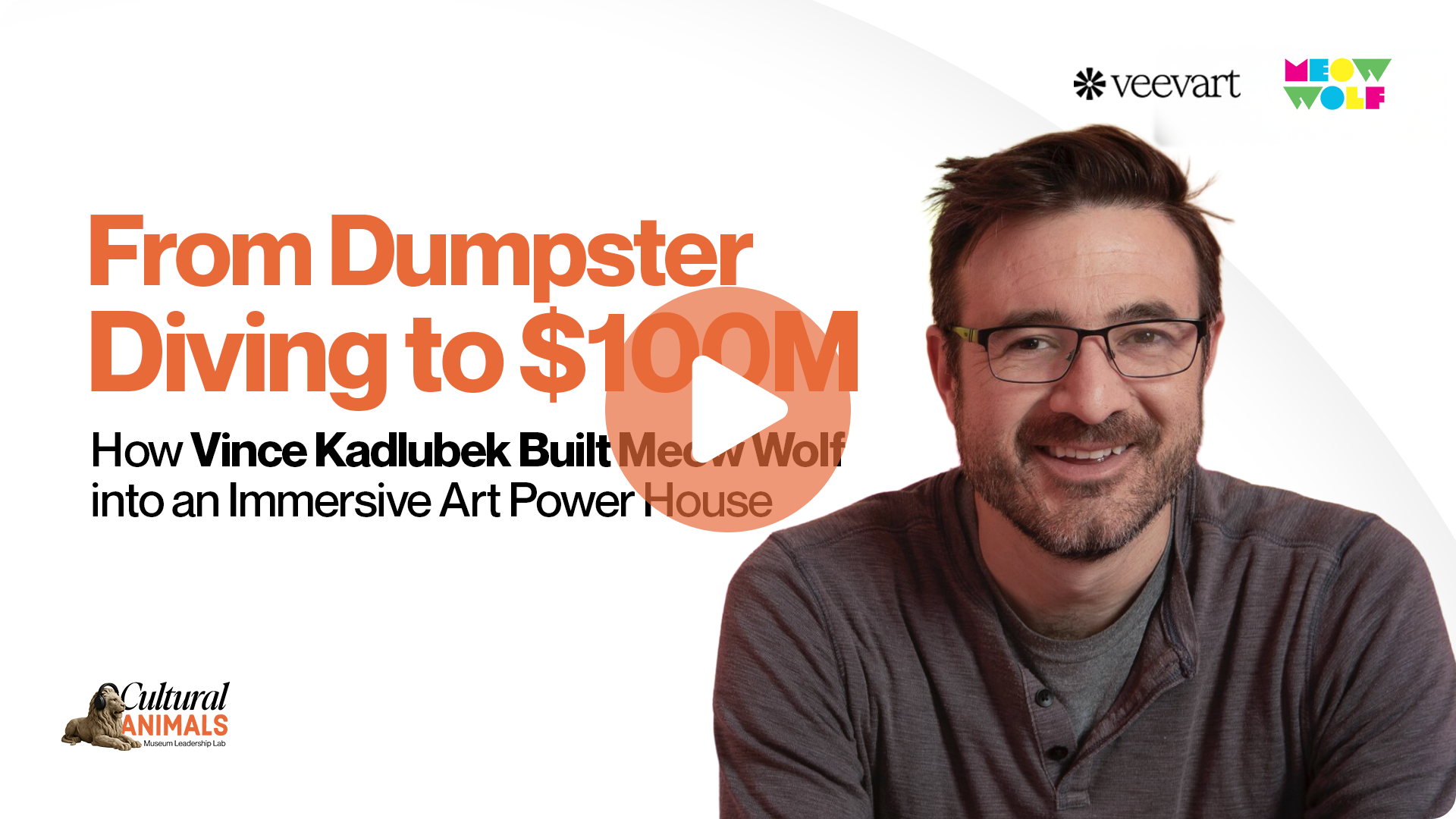
Watch Podcast Now →
A City That Didn't Have Room for Them
Santa Fe is one of America's most celebrated arts destinations. Santa Fe is one of America's most celebrated arts destinations. Its renowned galleries, rich Indigenous and Spanish heritage, and vibrant tourism industry have made it a cultural destination recognized around the world.
But in 2008, many younger artists didn't feel like they belonged.
"It felt like the identity of Santa Fe was quite limiting," Kadlubek recalled. "It didn't feel like we fit into the cultural conversation."
After trying to find opportunities through existing museums, galleries, and music venues, Kadlubek and a group of friends stopped waiting for permission.
Instead, they rented their own building.
There were no applications, no résumés, and no gatekeepers. If someone wanted to help paint walls, build sculptures, write music, or create experiences, they were welcome.
"The only rule," Kadlubek said, "was participate."
Money was almost nonexistent. Members of the collective worked restaurant shifts, hotel front desks, and whatever jobs they could find. Building materials often came from dumpsters or donated scraps. Every dollar went back into creating the next experience.
Discovering the Power of Immersive Experiences
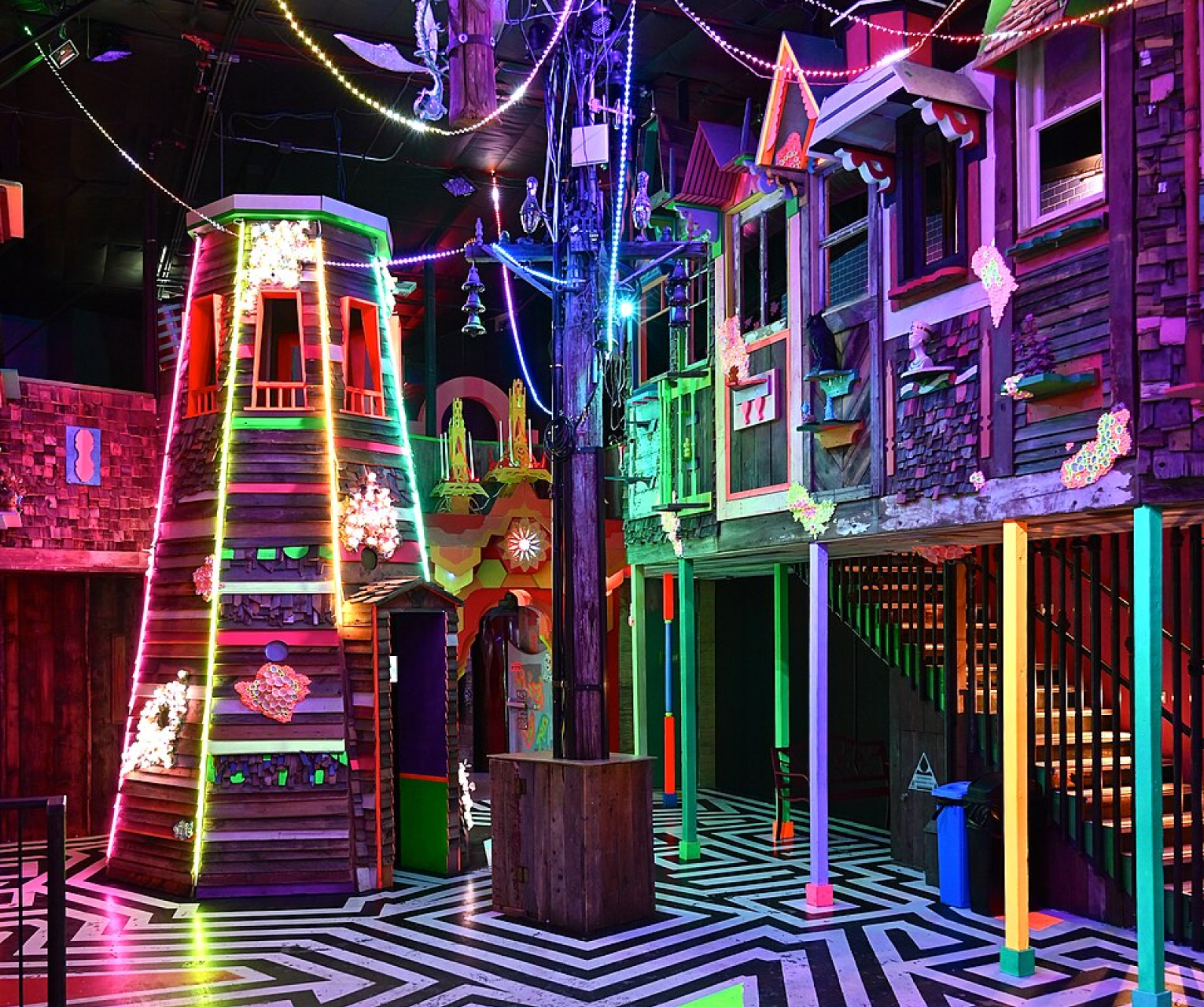
Only a few months after securing their first space, Meow Wolf debuted its first collaborative exhibition: Biome NeuroNorb.
Today, immersive experiences have become mainstream. In 2008, they barely existed as a recognized category.
The exhibition combined sculpture, sound, storytelling, interactive mechanics, lighting, and original music inside a 1,000-square-foot space. Visitors had never seen anything quite like it.
More importantly, the artists discovered something unexpected.
The collaborative process itself created something bigger than any individual could have built alone.
Every inch of the exhibition was intentionally designed. Visitors pushed buttons that activated hidden mechanisms. Stories unfolded through exploration instead of labels. People didn't simply look at the artwork.
They stepped inside it.
That realization became the foundation of Meow Wolf's future.
Seven Years of Constant Financial Struggle
Despite the excitement surrounding their work, success didn't immediately translate into financial stability.
For seven years, the collective scraped together funding however they could.
Donations.
Grants.
Passing a hat after performances.
Working day jobs.
Building increasingly ambitious projects while wondering how next month's rent would be paid.
"Those seven years were a constant worry about money," Kadlubek admitted.
One project led to another.
A large theatrical production evolved into a massive two-story ship installation at Santa Fe's Center for Contemporary Arts.
The ship attracted thousands of visitors and generated roughly $100,000 in donations.
Every dollar went directly into the next project.
The group traveled to Chicago, Miami, Las Cruces, and San Antonio producing immersive installations, often sleeping shoulder to shoulder on floors because hotels weren't in the budget.
As members entered their thirties, many faced difficult decisions about careers and families.
Some left.
A smaller core team stayed committed to the vision.
The Decision That Changed Everything
Eventually Kadlubek realized something had to change.
If Meow Wolf continued operating as a series of temporary art projects, the organization would never become sustainable.
His proposal was simple.
Build one permanent experience.
Sell tickets.
Market it professionally.
Operate like a real business while preserving the artistic soul that made the collective special.
Not everyone joined Meow Wolf to build a company.
Many joined simply to make art.
Receiving support from fellow co-founder Katie Kennedy proved pivotal.
Her encouragement gave Kadlubek confidence to pursue what became the organization's defining turning point.
The George R.R. Martin Connection
While searching for a permanent home, Kadlubek walked into an abandoned bowling alley.
It immediately felt right.
There was only one problem.
Meow Wolf had no money.
The solution came through an unexpected relationship.
Years earlier, Kadlubek had worked for George R.R. Martin at the author's Santa Fe movie theater. Martin had followed Meow Wolf's work and admired what the collective was creating.
When Kadlubek reached out with the opportunity, Martin agreed to help.
The result became the House of Eternal Return.
Opening in 2016, the Santa Fe exhibition exceeded every expectation.
The team hoped to attract 100,000 visitors during its first year.
Instead, more than 400,000 people walked through its doors.
Scaling Success Brings New Challenges
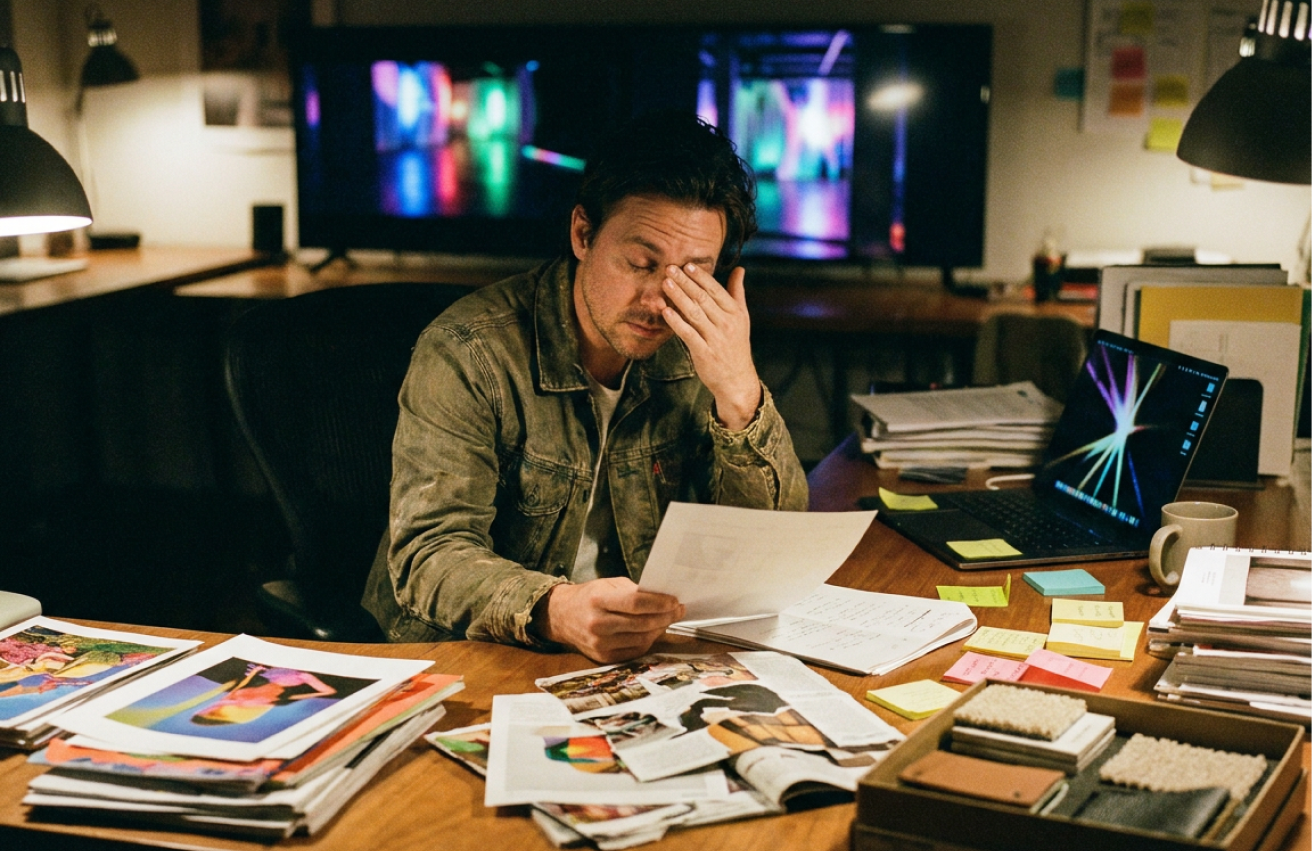
Success created an entirely different set of problems.
The artists who built the exhibition wanted to keep creating.
The business now had to support hundreds of employees, larger facilities, and increasingly ambitious installations.
Expansion into Denver and Las Vegas introduced costs that far exceeded early projections.
Kadlubek hired experienced financial leadership to understand what the company truly needed.
The answer was staggering.
Meow Wolf needed to raise tens of millions of dollars.
Over the next several years, Kadlubek pitched approximately 400 investors across venture capital firms, private equity groups, studios, and family offices.
Almost every answer was no.
The pressure became overwhelming.
"It caused sleepless nights, high anxiety, and suicidal thoughts," Kadlubek shared candidly. "I had 500 employees... if we couldn't close the funding, we'd have to tell the entire company we failed."
Eventually, persistence paid off.
A private equity firm approached Meow Wolf and became its investment partner, allowing the organization to secure the funding needed for continued growth.
When Leadership Takes Its Toll
Building Meow Wolf required more than financial resilience.
It required enormous emotional endurance.
As CEO, Kadlubek found himself solving problems every hour of every day. The constant pressure gradually changed how he interacted with the people around him.
"I totally lost the empathy," he admitted. "My nervous system was just totally shot."
Eventually, he stepped away from the CEO role.
The time away gave him an opportunity to recover, reflect, and reconnect with the creative mindset that had inspired Meow Wolf from the beginning.
During that period, he explored practices that helped him regain perspective and rebuild a healthier relationship with leadership. While some of those experiences were deeply personal, Kadlubek emphasized that the lasting lesson wasn't about any particular method. It was about finding ways to step outside constant pressure and reconnect with curiosity, creativity, and empathy.
Today, he maintains that perspective through more sustainable practices like meditation, spending time in nature, and intentional reflection.
For leaders, the lesson is universal.
Every organization demands constant decisions. Without intentionally creating space to recharge, it's easy to lose sight of the creativity and empathy that inspired the mission in the first place.
Protecting Meow Wolf's Soul
When Kadlubek returned to Meow Wolf, he came back with a different mission.
Not simply to build bigger attractions.
To protect the company's identity.
As Meow Wolf hired professionals from Disney, Universal, and other large entertainment organizations, new operational discipline entered the business.
But so did new cultural tensions.
The challenge became balancing structure with artistic authenticity.
Rather than seeing those competing perspectives as a problem, Kadlubek now views them as one of Meow Wolf's greatest strengths.
"It's the amalgamation and the friction that happens when perspectives collide," he said, "that we are constantly trying to manage and work forward from."
That balance between creativity and commercial success continues to define Meow Wolf today.
What Museums Can Learn from Meow Wolf
Kadlubek credits several institutions with influencing Meow Wolf's development.
The City Museum in St. Louis demonstrated that immersive, artist-driven experiences could also become financially sustainable businesses. Salvation Mountain in California showed how a single creative vision could inspire visitors from around the world. The Museum of Jurassic Technology illustrated the power of mystery and storytelling. And, of course, Disneyland proved decades ago that immersive environments could fundamentally change how people experience culture.
The lesson wasn't simply about creating larger attractions.
It was about creating experiences that people remember.
For museums, that's an increasingly valuable perspective.
Technology changes.
Business models evolve.
Visitor expectations shift.
But meaningful experiences remain timeless.
The Moment That Made It All Worth It
When Antonio Velasco asked which visitor memory stays with him the most, Kadlubek immediately recalled opening day at the House of Eternal Return.
A nine-year-old boy walked into the magical forest section of the exhibition.
He stopped.
Dropped to his knees.
Raised both hands.
And said:
"I've been waiting my whole life for this."
He was nine years old.
For Kadlubek, that single moment captured everything Meow Wolf had been trying to create since those early days building sculptures from discarded materials.
It's also a reminder for every museum leader.
The exhibits, the fundraising, the operations, and the strategic planning all serve a larger purpose.
Creating moments that make people feel something they will never forget.
Listen to the full conversation with Vince Kadlubek on the Cultural Animals: Museum Leadership Lab podcast.
Apple Podcast →
Spotify →
Check Out All Of Our Cultural Animals: Museum Leadership Lab Podcasts →
Cultural Animals: Museum Leadership Lab is hosted by Antonio Velasco and explores leadership, innovation, and the future of cultural institutions.