From Event Chaos to Event Strategy: Rethinking Museum Program Management
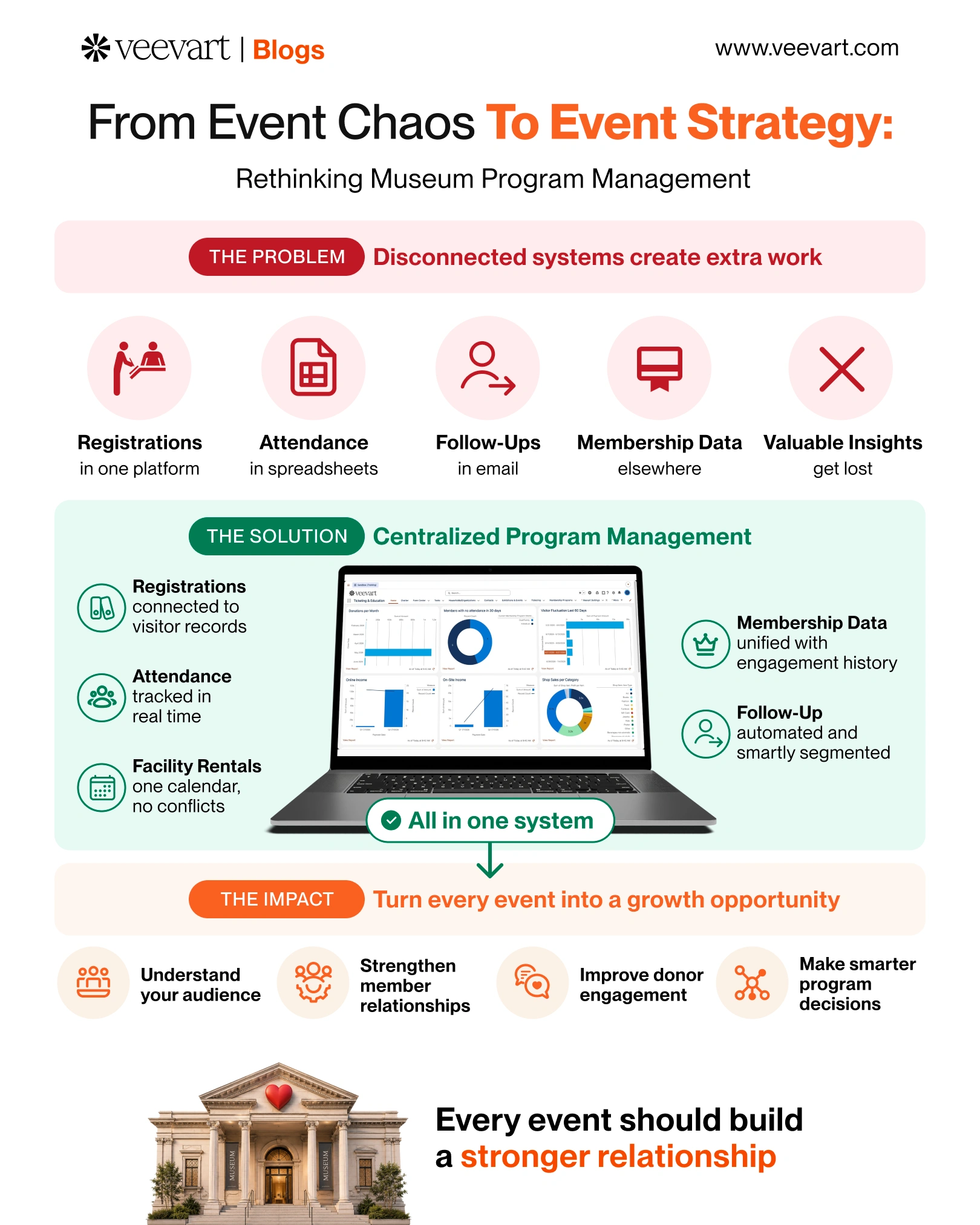
The lecture sold out in three days. Forty-eight people showed up on a Tuesday evening, stayed for the full ninety minutes, asked good questions, and left. By every visible measure, it was a success.
Two weeks later, nobody on the development team knew those forty-eight people attended. Nobody on the membership team knows which of them were not members. Nobody has followed up with the twelve who registered, but did not show., A group that in most institutions just quietly disappears. The registrations live in an Eventbrite account. The attendance sheet was a printed list that someone marked up with a pen. The follow-up email went out from a personal inbox.
The event was a success. The relationship intelligence it generated was lost before anyone thought to use it.
This is the gap between event execution and event strategy. Most museums are good at the first part. Almost none are doing the second part effectively.
What Museum Programs Actually Are (And How They Get Treated)
A lecture, a workshop, a family program, a members-only preview, or a facility rental is not just an event. It is an opportunity to deepen engagement, strengthen relationships, and advance your mission. They are the moments when visitors move from passive attendance to active engagement with the institution. The person who comes to a curator talk is more invested than the person who bought a ticket to the permanent collection. The family that signs their kid up for a summer workshop is telling you something about their relationship with the museum that a single admissions purchase never could.
Programs are the museum's best opportunity to deepen relationships at scale. And most institutions are managing them with a combination of spreadsheets, separate ticketing platforms, email threads, and manual follow-up that treats each event as a one-time transaction rather than a chapter in an ongoing relationship.
The operational cost of that approach is visible and significant. The strategic cost is quieter and larger.
The Operational Cost: Where the Work Accumulates

Ask the person who runs programming at a mid-sized museum how they manage events. The answer usually involves at least four systems and a number of manual steps between them that exist because no one has had time to fix them.
Registration lives somewhere the CRM can't see. Registrations often arrive through a patchwork of systems: Eventbrite, Google Forms, or a ticketing platform that no one on the current staff selected. Data comes in through one channel and must be manually imported, re-entered, or reconciled against the membership database to determine who is actually attending. For a single event, that can mean several hours of administrative work. Across a full programming calendar, it becomes a part-time job.
Capacity and waitlists are managed by hand. When a workshop fills up, someone is monitoring a spreadsheet and manually notifying people on a waitlist. When a cancellation comes in through email, someone again manually updates the count. When a no-show opens a spot the day before the event, it usually doesn't get filled because there's no automated path from "spot opened" to "next person on the waitlist notified."
Facility rentals. Ask the rentals coordinator where the private event calendar lives and they’ll point you to a spreadsheet, or a shared Google doc, or a booking tool nobody else has access to. Ask the programs manager the same question and they’ll show you something completely different. Neither of them is wrong. There just isn't one answer. Which is fine until a corporate client and a members-only preview end up on the same night in the same gallery, and nobody catches it until the caterer shows up to start setting tables.
Post-event follow-up is inconsistent or absent. After an event closes, the urgency moves to the next one. The attendee list from last Tuesday's lecture is still sitting in someone's downloads folder. The follow-up email, if it goes out at all, goes to everyone who registered. This includes the twelve who did not show and the six who are already members and probably should not be getting the same message as the first-time visitors.
Each of these is a solvable problem. Together, they produce a programming operation that runs on institutional goodwill and staff capacity rather than systems built to handle it, which means it scales only as far as the people running it can personally hold together.
The Strategic Cost: The Intelligence That Disappears
The operational problems are frustrating. The strategic cost is what makes them expensive.
Every event leaves a trail. Who registered. Who showed. Who came back three months later for something else. Who registered twice and never attended either time. When viewed across an entire programming year, that trail provides a richer understanding of your audience than a membership database alone. It reveals which programs bring new people into your ecosystem, which strengthen existing relationships, and which generate attendance without creating lasting engagement.
When event data lives in a separate system from your membership and donor records, that intelligence never gets assembled. The development director doesn't know that the person who just made their first major gift has also attended eleven programs in the past two years. The membership team does not know that a cluster of workshop attendees from last spring never converted, and that a targeted follow-up to that specific group might be worth more than a general renewal campaign. The program manager does not know that their Thursday evening lecture series is pulling a significantly higher percentage of non-members than their Saturday workshops. Which has real implications for how both should be marketed.
This isn't hypothetical intelligence. It's sitting in separate systems, unreachable, because nobody built a path between them.
What Centralized Program Management Actually Looks Like
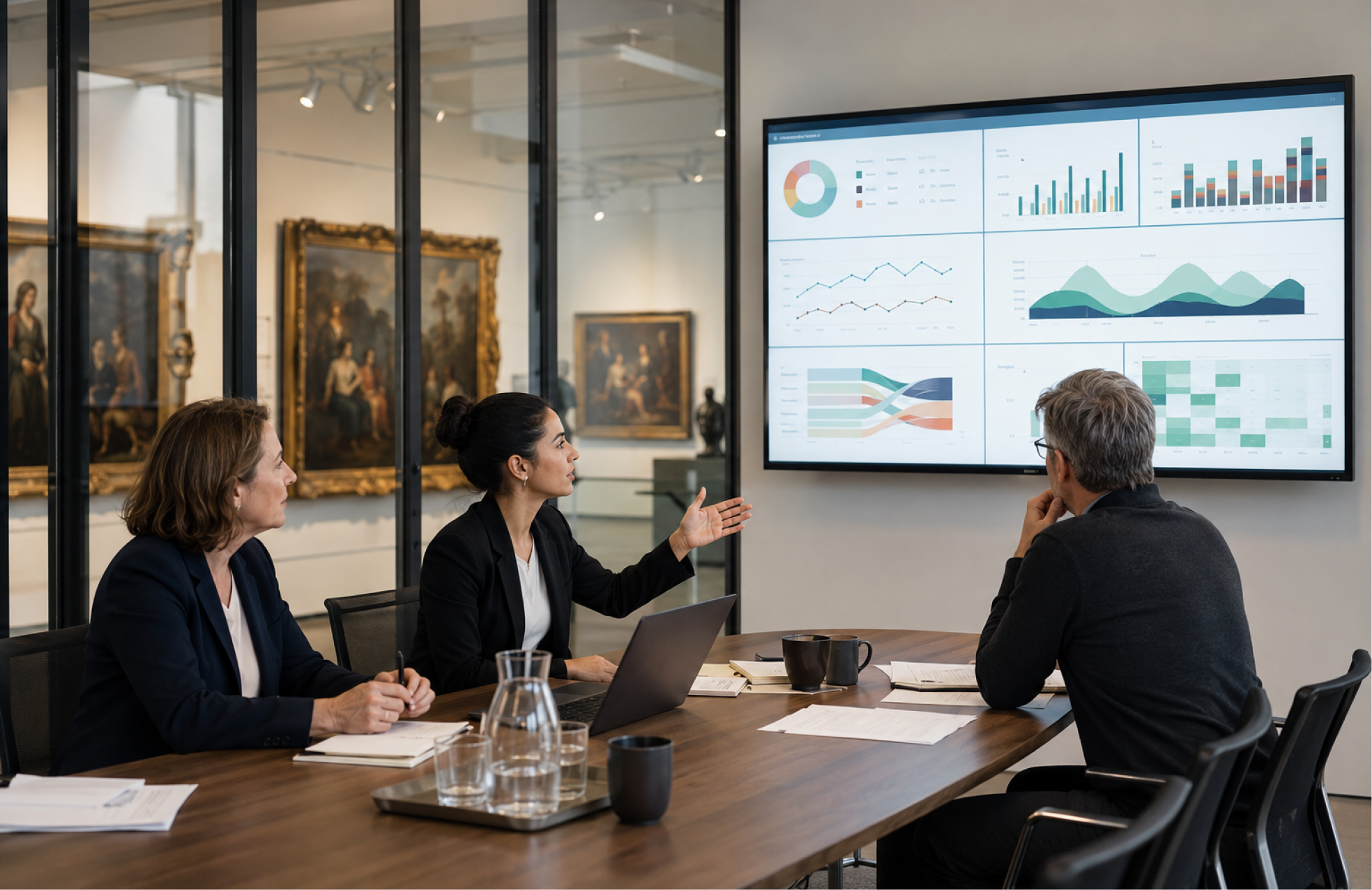
When event registration, attendance, and follow-up live in the same system as your membership, ticketing, and donor data, a programming calendar stops being an operational burden and starts being a strategic asset.
Registration flows directly into visitor records. When someone registers for a lecture, that registration attaches to their record in the CRM. If they are a member, the system knows. If they are not, the system knows that too, and the follow-up communication can reflect the difference. No import, no re-entry, no reconciliation project.
Waitlists and capacity manage themselves. When a spot opens, the next person on the waitlist gets notified automatically. When someone cancels, the count updates. When registration hits capacity, the form closes. Staff who were spending time monitoring spreadsheets spend that time on something else.
The facility rental calendar lives in the same place as everything else. One calendar. One system of record. The programs manager and the rentals coordinator are looking at the same information, which means the Saturday conflict gets caught before both parties have made promises they can't keep.
Post-event follow-up becomes segmented by default. After the lecture, the attendee list is already in the CRM, already segmented by membership status, already ready for follow-up that reflects what you know about each person. The twelve no-shows get a different message from the forty-eight who attended. The non-members who came get a different message from the members who did. None of that requires a manual segmentation project; it is just what the data already knows.
Program attendance becomes visible across the relationship. Over time, a centralized system builds a picture of engagement that no spreadsheet ever could. The visitor who has attended seven programs, bought tickets four times, and never joined becomes visible as someone worth a personal outreach. The member whose engagement pattern shifted, fewer events, shorter visits, surfaces as someone whose renewal might need attention. These are patterns that only emerge when all the data is in one place.
The Difference Between Running Events and Learning From Them
The museums that run programs well fill seats and get good feedback. The ones that run programs strategically use every event to learn something about their audience and act on it before the next one.
That second kind of institution knows which program types are most effective at converting first-time visitors. It knows which members are deeply engaged through programming and which are passive, and it treats those two groups differently at renewal time. It knows when a new program is outperforming expectations early enough to add capacity, and when a perennial program is quietly losing its audience before the numbers become a problem.
None of that requires a larger programming budget or a bigger team. It requires that the data generated by every event, who came, who did not, who came back, flows somewhere useful instead of disappearing into a spreadsheet that nobody looks at after the event closes.
The lecture that sold out in three days generated forty-eight relationships worth building on. The only question is whether your systems are built to do anything with them.
Veevart centralizes event registration, facility rentals, and program management alongside your membership and donor data, so every program your museum runs becomes a source of relationship intelligence, not just a line on a calendar.