How to Plan a Successful Soft Opening for Your Museum
A soft opening gives museums an opportunity to fine-tune everything from staff readiness to key operational processes before the grand opening. While it’s a time to test your revenue streams and marketing strategies, it’s equally important to focus on the visitor experience, operational efficiency, and staff preparedness. A well-executed soft opening ensures that your museum is ready to meet the expectations of your visitors while operating smoothly. Here are some basic recommendations.
1. Establish Clear Objectives and Duration
Before diving into the operational and financial details, it’s essential to set clear objectives for your soft opening. A successful soft opening allows you to:
Ensure that staff are well-trained and prepared for real-world situations.
Test and optimize key processes, such as admissions, visitor flow, and cleaning schedules.
Evaluate the functionality of technology—both onsite and online.
Create a welcoming, accessible environment for all visitors.
Establish routines for marketing and communication with potential visitors.
By setting these objectives, you can structure your soft opening as a comprehensive rehearsal for the full public launch. This will give your team the chance to identify areas for improvement and implement any necessary changes.
2. Train and Prepare Your Team
One of the main goals of the soft opening should be to ensure that your staff is ready to deliver exceptional service. This includes not only front-line staff interacting with visitors but also the behind-the-scenes teams responsible for operations and maintenance.
What to Focus On:
Staff Training: Ensure that all staff, from ticketing to museum guides, are fully trained and knowledgeable about the museum’s layout, exhibits, and procedures.
Customer Service Excellence: Test how well staff can handle common visitor questions, complaints, or technical issues, ensuring they provide consistent, friendly service.
Emergency Procedures: Make sure staff are familiar with emergency protocols, including evacuation routes and procedures for dealing with accidents or medical incidents.
A well-trained team can make a huge difference in the visitor experience and help your museum build a reputation for outstanding service.
3. Assess Key Operational Processes
The soft opening is an opportunity to test the core operational systems that will shape the daily running of your museum. This includes everything from admissions to cleaning schedules to technology systems.
Ticketing and Entry: Test both online and onsite ticketing systems to ensure smooth sales and entry processes. Does the ticketing system work properly for various payment methods? Are lines manageable and moving efficiently?
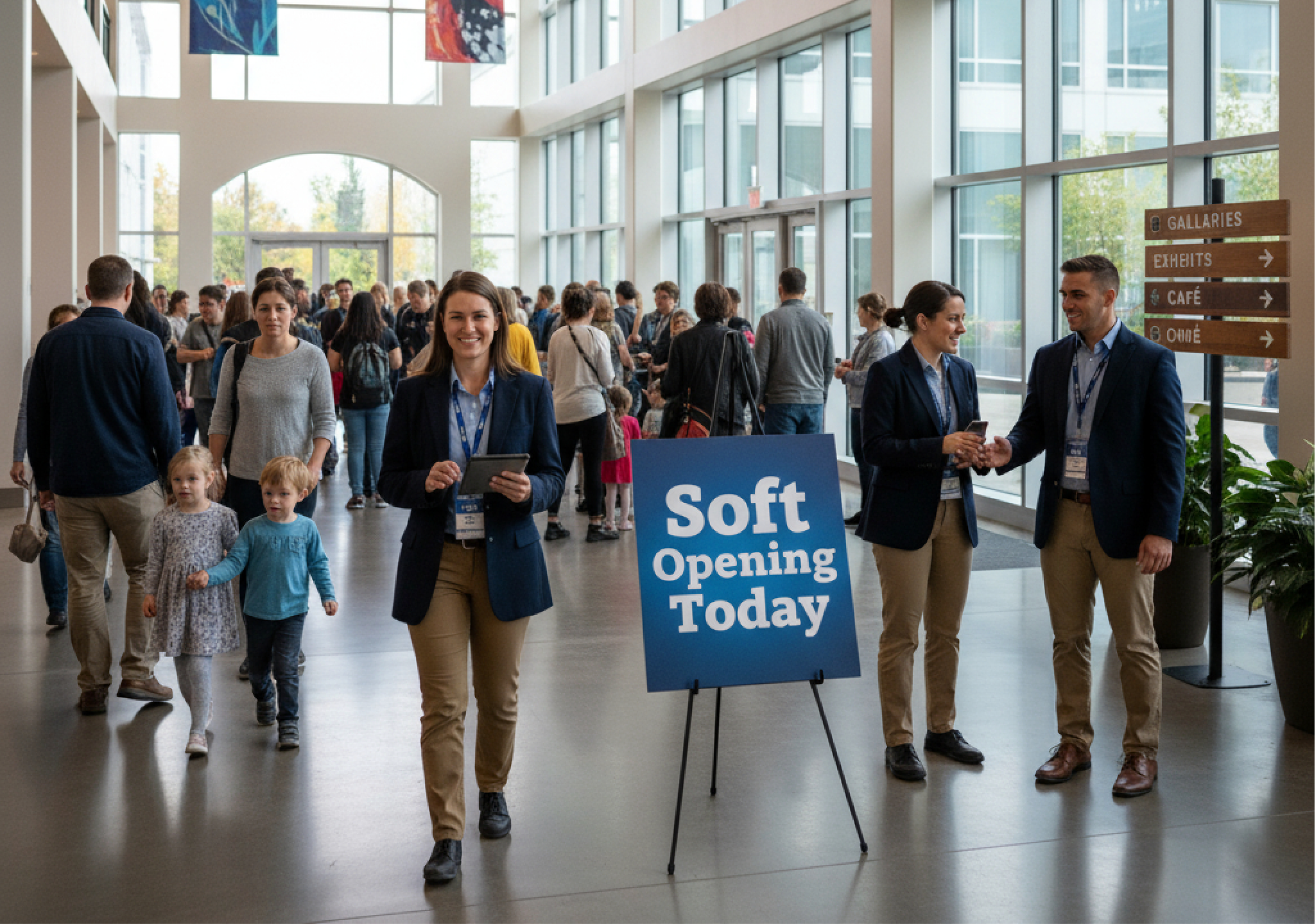
Visitor Flow and Exhibit Navigation: Evaluate how your visitors move around the museum, what are the more popular places, and arrange accordingly to avoid bottlenecks and poor visitor experience. Are visitors able to easily navigate through exhibits and find key areas, such as restrooms, exits, and the café? Test wayfinding systems, including maps, signage, and staff guidance.
Restroom and Facility Cleanliness: High traffic areas like restrooms should be regularly cleaned and monitored. Assess the frequency of cleaning services and whether any adjustments are needed based on visitor numbers.
Exhibit Maintenance: Ensure that all exhibits, especially those with interactive components, are properly maintained and functioning.
Visitor Accessibility: Test whether your museum is accessible to everyone, including individuals with disabilities, families with strollers, and elderly visitors. Make sure elevators, ramps, and accessible restrooms are clearly marked and easy to find.
Visitor Feedback: Implement feedback systems (e.g., surveys, digital forms) to gather visitor insights. This feedback will help you identify areas for improvement, from exhibit layout to customer service.
4. Optimize Financial Operations
While testing your operations is important, financial considerations should also play a significant role in your soft opening. This is the time to evaluate your revenue streams and cost structures to ensure that your museum is financially sustainable.
Evaluate Ticket Pricing: Test whether your pricing strategy is balanced between accessibility and profitability. Are different pricing tiers (e.g., for students, seniors, and families) working as expected? Track how much revenue is being generated from ticket sales compared to operational costs.
Sales and Revenue Tracking: Use the soft opening to refine your point of sale (POS) systems in the ticketing area, café, and gift shop. Are transactions processed smoothly, and are systems integrated with your accounting tools?
Retail Sales Performance: Monitor daily sales in the museum store and café to gauge profitability. Are items priced appropriately, and is there enough stock of popular products?
Inventory Management: Use the soft opening to test inventory tracking systems and identify any issues with restocking or product availability.
5. Test Marketing and Communication Routines
The soft opening is also a valuable opportunity to establish and test your marketing and communication strategies. This includes both traditional marketing (e.g., advertising, promotions) and digital channels (e.g., social media, email marketing).
Social Media Engagement: Use the soft opening to engage with your audience on social media. Share behind-the-scenes content, sneak peeks of exhibits, and updates about the soft opening experience.
Advertising ROI: Track the return on investment (ROI) of your marketing campaigns, whether you’re running paid ads, social media promotions, or email marketing. Evaluate which channels drive the most traffic and ticket sales.
Visitor Acquisition Costs: Calculate the cost of acquiring each visitor through your marketing efforts, helping you optimize future marketing strategies.
6. Gather and Act on Feedback
A soft opening provides the perfect opportunity to collect feedback from both staff and visitors, allowing you to make necessary adjustments before the grand opening.
Visitor Surveys: Offer easy-to-use surveys (both digital and physical) for visitors to provide feedback on their experience. Ask about key areas like admissions, exhibit navigation, and staff interactions.
Staff Debriefs: Hold regular debrief meetings with staff to gather their insights on what went well and what could be improved, such as workflow efficiency or visitor handling. Mornings are perfect for this - people will tell you what went well and wrong the day before, and ask questions if they have any
Actionable Adjustments: Prioritize feedback and implement changes quickly. Whether it’s revising cleaning schedules, adjusting ticket prices, or improving signage, making changes early will help ensure a smooth grand opening.
A soft opening is an essential step in preparing your museum for a successful grand opening. By focusing on staff readiness, operational efficiency, visitor experience, financial optimization, and marketing routines, you’ll be able to identify any potential challenges and make improvements before the museum fully opens to the public.