Beyond the Five-Year Plan: How Museums Can Turn Their Assets Into Sustainable Growth
Watch Podcast Now →
What if your museum visit started the night before you walked in the door?
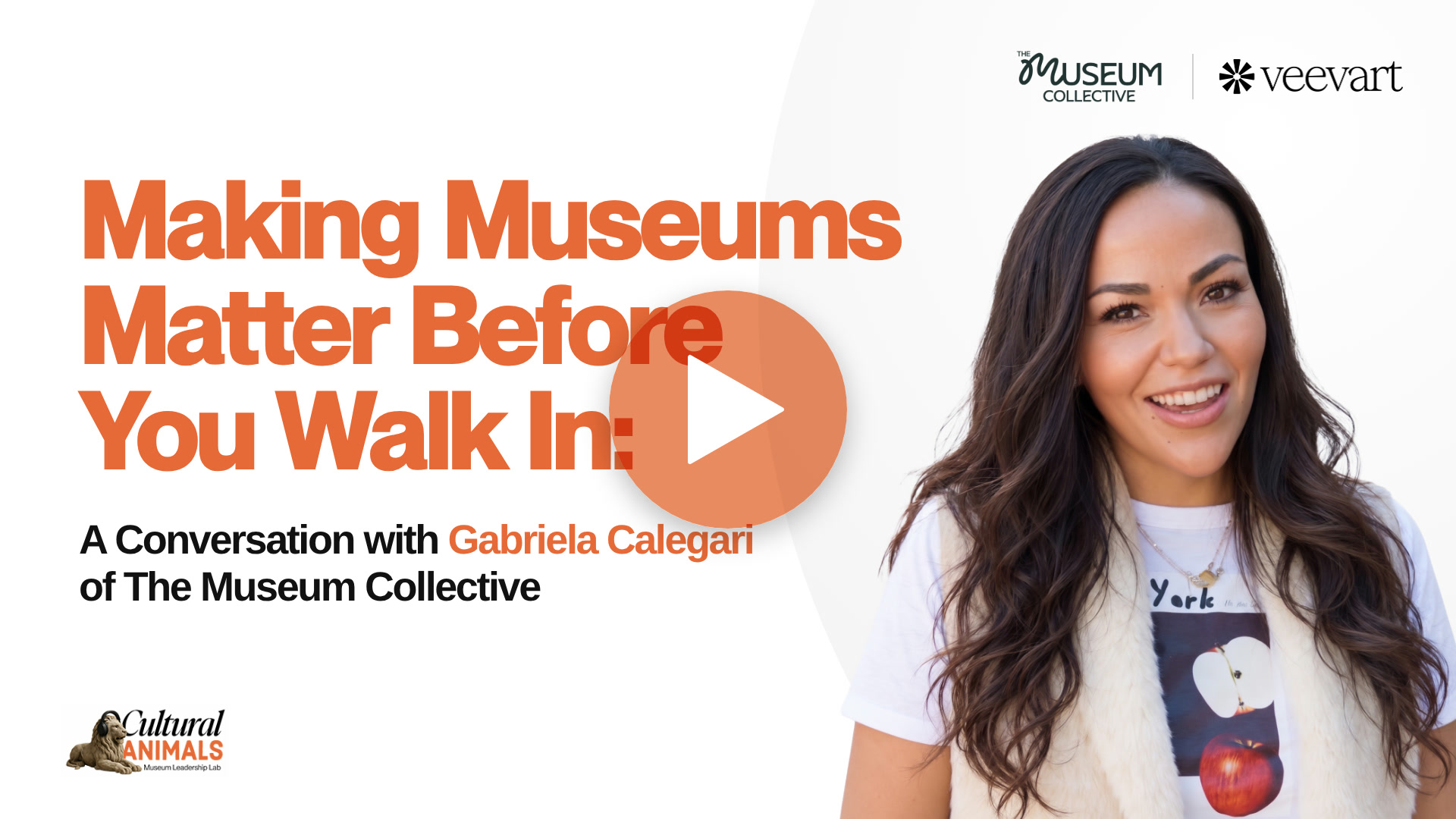
That simple idea is at the heart of our latest episode of the Cultural Animals Museum Leadership Lab podcast. Our host, Antonio, sat down with Gabriela Calegari, the founder of The Museum Collective. Her company connects art experts around the world with families and visitors who want more from their museum trips.
Gabriela is not a museum insider. That is exactly what makes her story so worth hearing.
An Unexpected Path to Museums
Gabriela spent over ten years in corporate business development in the packaging industry. Later, she ran a food truck. Then her husband came home with big news. The family had 30 days to move to New York.
She sold the business in a month. Because it was the middle of the school year, she started homeschooling her two kids. That choice opened a whole new chapter.
Spending every day with her children, Gabriela wanted them to truly fall in love with art and history. Walking past paintings was not enough. So she made a rule: every Friday, the family visited a different New York museum.
She also asked a bigger question. How could her kids ever learn from, say, a history PhD living in London? That question became The Museum Collective.
The Night Before the Louvre
The idea took shape before a family trip to Paris. Gabriela hired an art expert to write a custom guide to the Louvre.
The night before the visit, she sat in her living room reading it. She learned something she never knew, even after several trips to the Louvre. The Mona Lisa became world famous partly because it was stolen. In 1911, an Italian man (Vincenzo Peruggia) who worked at the museum took it. He believed it belonged in Italy. The painting was missing for over two years before it was found.
The family talked about the story all evening. What was the thief thinking? How did people react?
The next day, Gabriela handed the guide to her husband. He and their daughter led the way like pros. The guide told them which entrance to use and which works to stop at. It even warned them not to rush past the Mona Lisa, because there is no easy way back. And yes, it mentioned the café with macarons at the end.
Two days later, they visited Versailles without a guide. The kids were bored within minutes. The difference was clear. Gabriela knew she was onto something.
How The Museum Collective Works
The model is simple. Art experts create guides. Visitors buy them. Creators earn a percentage every time their guide sells, which gives them ongoing income from work they do once.
Today, The Museum Collective has over 250 creators in 25 countries.
Gabriela does not pitch museums directly. Instead, she connects with them through the Cultural Calendar. It is a website that lists events and exhibits happening at museums. It is rolling out in New York, Washington, DC, and Paris. Museums now reach out to have their events listed.
For Gabriela, it is all about the pre-journey. "If the journey starts when you walk into the museum, you're doing it wrong," she explained. Planning ahead makes the whole visit better.
Multiple guides can exist for the same museum. Reviews help the best ones rise. As Gabriela pointed out, you could use 10 or 15 guides at the Met and still not be done. That is a good thing. It gives people reasons to come back again and again.
Off the Screen, Into the Art
Many museums invest in audio guides and apps. Gabriela chose a different route. Her guides are made to be printed, with scavenger hunts, word searches, and games.
Why? She wants people off their phones. On a screen, a text or email always pulls you away. Then you are not looking at the painting anymore.
She shared a story from a trip to DC. Everyone in the family had their own headphones. What started as a family outing turned into everyone wandering off alone.
Compare that to a visit to the Met Cloisters. A guide by creator Alexandra Key, a medieval art specialist, explained something fun. Medieval painters often drew animals they had never seen. They worked only from descriptions. So camels looked like dinosaurs, and seals looked like dogs.
Gabriela told her kids this on the car ride over. Once inside, they spotted every funny animal. Even the museum staff joined the scavenger hunt. Other visitors asked where they could get one. At one point, her son handed her the jackets and said, "Here, Mom. You're my helper. I got this."
Lessons for Museum Leaders
Gabriela shared a few ideas every museum professional can use.
Expertise is not the same as communication. Many art experts are brilliant but very academic. That is why The Museum Collective trains its creators with teachers, from kindergarten up. The goal is to speak to every age and audience.
Don't assume everyone is a museum person. Most visitors are not. Some smaller museums even bought her guides to other institutions for inspiration. She offered to help them build their own.
Give people context. A good story turns a quick walk-through into a lasting memory. At the Frick, one guide sent her searching for a tiny rabbit hidden in a painting of St. Francis. She stared at it for 15 minutes.
Think about AI as a storytelling tool. Gabriela understands why museums want to protect curatorial accuracy. The Museum Collective uses human creators, not AI. Still, she sees an opportunity. Visitors already use AI, but many don't know what to ask. Museums could offer suggested prompts next to their labels. "What is this painting?" gets a flat answer. "What was happening at the time that inspired this painting?" gets a story.
Growing, Listening, and Looking Ahead
The Museum Collective is building a strong base in New York first. Two companies in Rome have already reached out about partnerships. A New York museum is also preparing a press release about working with the team.
The hardest part? Every season reshapes the business. One day it is a call with a major museum. The next, it is a creator writing a guide to the Prado. Staying focused is a constant effort.
Gabriela credits one habit for keeping her on track: listening. As an immigrant, she learned early to welcome all feedback, good or bad. "It's a gift when people give you feedback," she said.
Her kids still visit museums about once a week to help test guides. Their art vocabulary has grown in surprising ways. Her six-year-old once asked a stranger if he knew that Jesus probably did not look the way old paintings show him.
That is the real magic of The Museum Collective. When people arrive prepared and curious, museums come alive.
Listen to the Full Episode
This conversation is full of fresh ideas for anyone who cares about museum visitors. Catch the full episode of the Cultural Animals Museum Leadership Lab podcast. And next time you plan a museum trip, take five minutes the night before. Your visit will thank you.
Apple Podcast →
Spotify →
Check Out All Of Our Cultural Animals: Museum Leadership Lab Podcasts →
Cultural Animals: Museum Leadership Lab is hosted by Antonio Velasco and explores leadership, innovation, and the future of cultural institutions.