Beyond the Five-Year Plan: How Museums Can Turn Their Assets Into Sustainable Growth
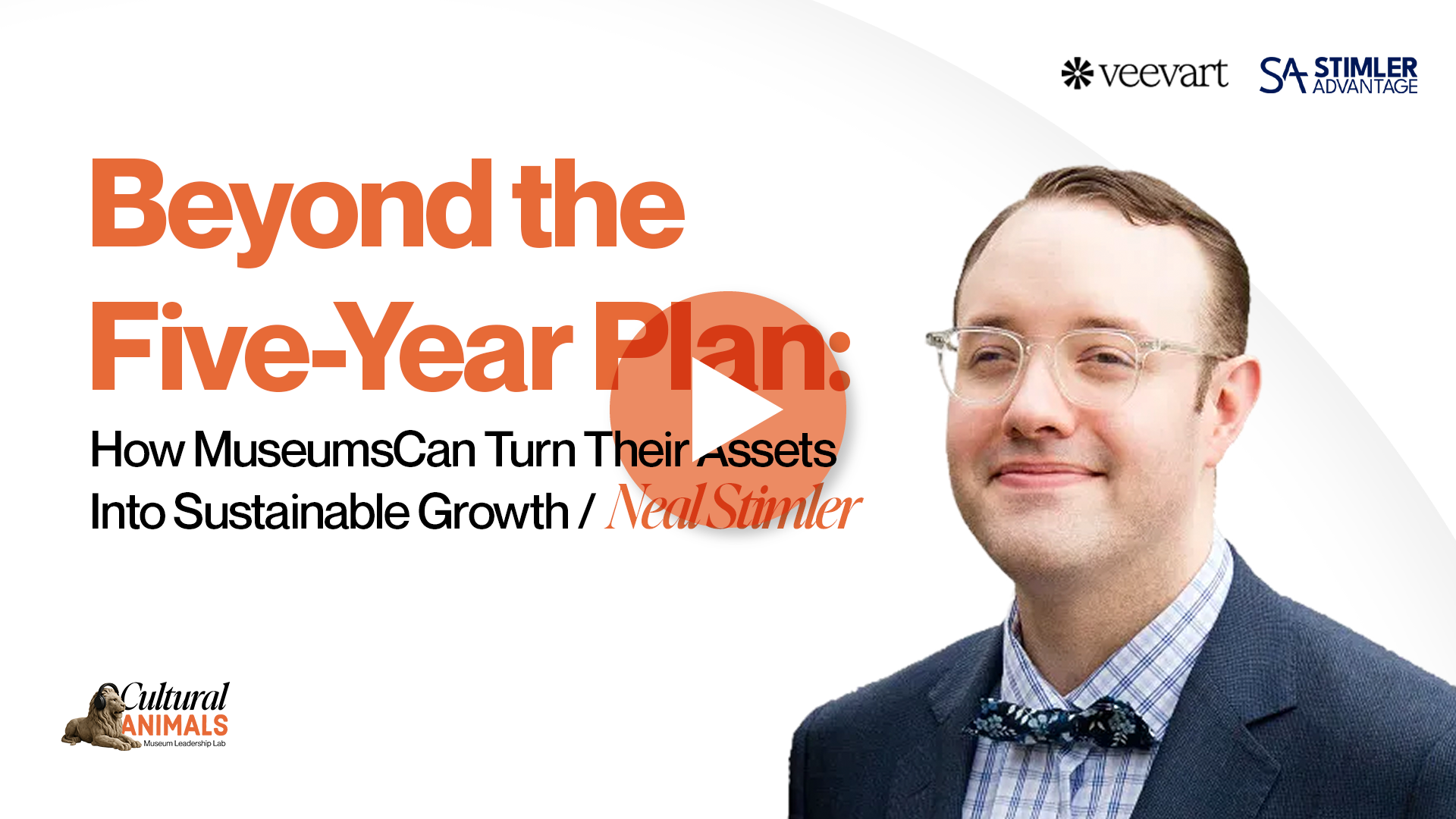
Watch Podcast Now →
Museums today are operating in what veteran museum strategist Neal Stimler describes as a "permacrisis," a continual state of pressure driven by economic, environmental, geopolitical, and social forces.
In a recent conversation on the Cultural Animals: Museum Leadership Podcast, Neal Stimler, who brings more than 20 years of international museum experience, including more than a decade at a major encyclopedic museum in New York City, shared a clear-eyed perspective on what museums can do to move beyond reactive survival mode and build more sustainable, self-reliant organizations.
The conversation covered everything from intellectual property and retail to artificial intelligence, strategic planning, governance, and the importance of treating a museum's collections, brand, and data as valuable institutional assets.
At the heart of it all was a simple idea: museums need to become more intentional about how they create, manage, and measure value.
The Core Problem: Misalignment and Underinvestment
Many museums are struggling with a basic disconnect between what audiences want and what institutions are offering.
Neal frames an effective visitor experience around three key elements: education, enjoyment, and entertainment. When one of these is neglected, museums risk losing relevance with audiences that have more choices than ever for how they spend their time and money, from theme parks and streaming platforms to video games and other cultural experiences.
That challenge is compounded by budget and strategic drift.
Resources can end up concentrated on high-profile temporary exhibitions that generate short-term attention, while less investment goes toward sustainable programming built around an institution's own collections, brand, and expertise.
Digital infrastructure is another major area of concern. Many museums continue to operate with legacy systems that are expensive to maintain, difficult to connect, and increasingly disconnected from the way modern organizations need to work. Without the right technology, data, and staff training, even well-intentioned strategies can become difficult to execute.
The result is what many organizations would recognize as technical debt, where outdated systems create ongoing operational costs and make it harder for teams to adapt.
Turning Collections and Brand Into Sustainable Revenue

One of the most actionable ideas from the conversation centers on intellectual property.
Museums with significant collections have opportunities to think about their assets in more than one way. One path is open access, where public domain data, images, and 3D models can be made freely available, often through approaches such as Creative Commons Zero.
Another is licensing, where an institution's brand, intellectual property, and reputation become valuable assets in their own right.
Museums that collaborate with clothing brands, designers, manufacturers, and other companies for co-branded merchandise are already demonstrating the potential of this approach. These partnerships can introduce museums to new audiences while creating additional revenue opportunities.
The bigger lesson is that museums should not overlook the value of what they already own.
Institutions that rely primarily on borrowed content or generic retail products can miss an opportunity to build a stronger connection between their collections, their brand, and their audiences. When the borrowed content disappears, so can the relationship.
Retail operations deserve the same level of strategic attention.
A strong museum retail operation requires more than having products available for purchase. Online and physical stores should work together. Product photography should represent the quality of the institution and its merchandise. Customer information should be connected across the organization so museums can better understand and engage the people who support them.
These may sound like basic operational considerations, but they are often overlooked in favor of short-term "quick wins."
AI: Prudent Adoption, Not a Silver Bullet
Artificial intelligence was another important part of the conversation, but the message was notably measured.
AI is an enhancement tool, not a replacement for human expertise or strong organizational foundations.
Museums that have not invested in clean metadata, digitized collections, reliable data, and connected operational systems will have a harder time getting meaningful value from AI, regardless of how much they invest in the technology itself.
For many institutions, the most immediate opportunities are not necessarily the most glamorous. Automating repetitive work such as data entry, invoicing, contract processing, and other administrative tasks can free staff to focus on higher-value activities.
There are also important questions around data sovereignty, privacy, intellectual property, and legal responsibility.
As museums adopt new technology services, involving legal counsel and establishing clear policies around institutional data will become increasingly important.
The takeaway is not that museums should avoid AI. It is that they should approach it strategically, starting with the organizational foundations that make the technology useful.
Moving From the Five-Year Plan to Dynamic Strategy
Perhaps the most practical shift discussed in the podcast is moving away from the traditional five-year strategic plan toward dynamic, data-informed planning cycles.
Instead of creating a plan that sits on a shelf for years, museums can establish quarterly priorities, measurable goals, real deadlines, and actual budgets.
That approach also requires breaking down departmental silos.
Ticketing, retail, fundraising, membership, collections, marketing, and operations all generate valuable information. When those teams operate independently, leadership can struggle to see the full picture. When data is shared across departments, museums can make better decisions about where to invest resources and where problems are emerging.
Growth goals deserve the same level of scrutiny.
A goal such as "grow membership by 30%" may sound ambitious, but the more important questions are: Where did that number come from? What does the market support? What resources are required to achieve it? And does the organization have the infrastructure to handle the resulting growth?
Growth for growth's sake is not necessarily progress.
Expanding a facility, for example, does little good if an institution's existing security, ticketing, staffing, or operational infrastructure cannot support the additional demand.
Dynamic strategy means setting ambitious goals while remaining willing to adjust based on what the data says.
Building Boards for the Challenges Ahead
Governance is another area where museums have an opportunity to evolve.
Many museum boards have traditionally been built around philanthropy, fundraising, and community influence. Those qualities remain important, but today's operating environment increasingly requires additional expertise.
Technology, legal, operations, business ownership, and digital transformation are all areas that can bring valuable perspectives to museum leadership.
Adding people with these backgrounds can help boards ask better questions, understand emerging risks, and provide more practical support as institutions navigate a rapidly changing environment.
The goal is not simply to build a larger board. It is to build a board with the range of knowledge and experience needed to help an institution move forward.
The Bottom Line: Museums Need to Get in the Game
The throughline across the conversation was self-reliance.
Museums that wait passively for grants, increased attendance, or the next capital campaign to solve their biggest challenges are giving up some control over their future.
Institutions that instead treat their collections, brand, customer relationships, data, and expertise as active assets have more opportunities to create value and build resilience.
That does not mean museums should abandon fundraising, philanthropy, or traditional sources of support. It means they should broaden the way they think about sustainability.
The same principle applies to strategy.
Planning cycles allow museums to test ideas, measure results, learn from what works, and change course when necessary.
Ultimately, the work is about getting off the sidelines.
Museums need to step onto the field, test ideas, gather data, and adjust. They need to be willing to rethink old assumptions, invest in the infrastructure that supports their teams, and find new ways to create value from the assets they already have.
Not five years from now.
Quarter by quarter.
Listen to the full conversation with Neal Stimler on the Cultural Animals: Museum Leadership Lab podcast.
Apple Podcast →
Spotify →
Check Out All Of Our Cultural Animals: Museum Leadership Lab Podcasts →
Cultural Animals: Museum Leadership Lab is hosted by Antonio Velasco and explores leadership, innovation, and the future of cultural institutions.