Running the Numbers on Glass: What 25 Years as a Museum CFO Really Looks Like
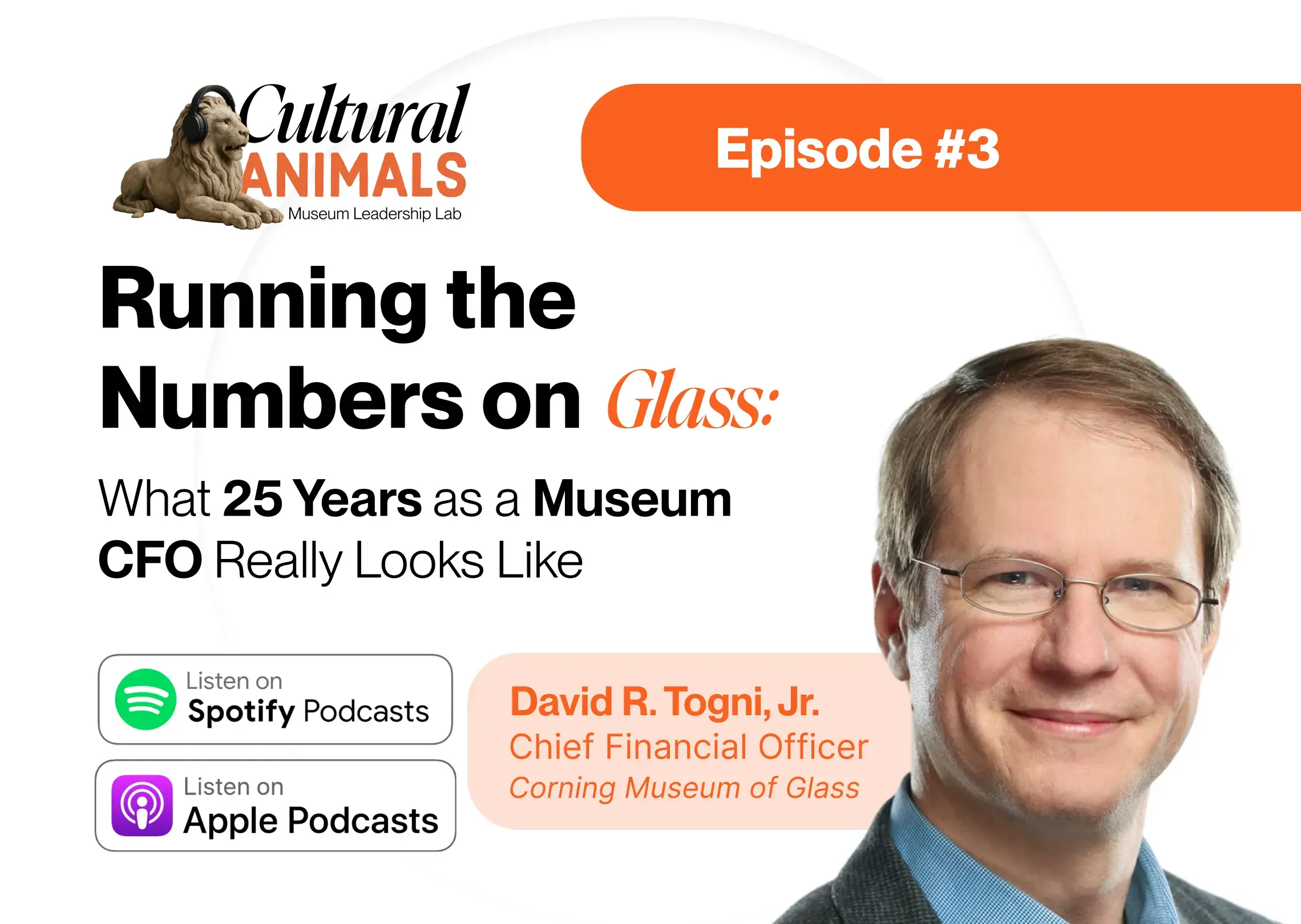
Cultural Animals: Museum Leadership Lab • Episode featuring Dave Togni, CFO, Corning Museum of Glass
What does a museum CFO actually do? If your answer involves quiet spreadsheets and predictable quarterly reports, think again. In this episode of the Cultural Animals: Museum Leadership Lab, host Antonio Velasco sits down with Dave Togni, Chief Financial Officer of the Corning Museum of Glass, for one of the most candid conversations in the series to date.
Watch on YouTube→
Listen and subscribe to the full Cultural Animals: Museum Leadership Lab podcast at:
Apple Podcast →
Spotify →
In 25 years at the museum, Dave has navigated maritime insurance for a glassblowing barge, structured employment contracts for artists working in international waters on cruise ships, led a workforce reduction through the pandemic, and helped build one of the most unique museum financial models in the country. He came from corporate accounting expecting a quieter life. What he found was anything but, and he would not trade it.
From Corporate Drudgery to a Museum Full of Glass
Dave’s path into the museum world was not driven by a lifelong passion for the arts. It started with burnout. After years in the public accounting industry, he found himself worn down by the corporate grind. When the Corning Museum of Glass offered him a role before another interview had even concluded, he took it on instinct.
“I thought it would be an easier job,” he admits with a laugh. “It turned out that it is complicated. We have a lot going on.”
That complexity is exactly what kept him there for a quarter century. The energy inside a museum is different. Staff are not there to get rich. They are there because they believe in the mission. That culture creates a different kind of pressure, one fueled by purpose rather than profit. That mission-driven pressure is a recurring theme across museum finance leadership — in our conversation with Nik Honeysett on The Real Business of Museums, he makes a similar case for why cultural institutions can't run on passion alone and need disciplined, sustainable business practices.

Cruise Ships, Barges, and the Unexpected Life of a Museum Finance Pro
If you picture a CFO staying firmly behind a desk, Dave’s story quickly challenges that assumption. One of the most memorable moments in the conversation is his description of a decade-long partnership with a major cruise line, where the museum sent glassblowing artists to perform live demonstrations at sea.
Open flames on a ship were not an option, so the team developed and patented flame-free electric glassblowing equipment designed specifically for maritime environments. At the end of each voyage, the pieces created during the shows were auctioned to support charitable causes and the museum’s studio scholarship fund.
Then there was the barge, a floating hot glass stage that traveled through New York’s canal system from Manhattan to Buffalo. That project came with an unexpected requirement: maritime insurance. Not something most CFOs expect when working at a museum in upstate New York.
These stories highlight what makes the Corning Museum of Glass so distinctive. Its deep expertise in glass continues to attract unconventional partnerships and revenue opportunities.
COVID: The Challenge That Changed Everything
Dave is direct about the impact of the pandemic. Three months of zero revenue. A workforce reduction of nearly 20 percent. Long-tenured employees with decades of institutional knowledge stepping away through voluntary retirement programs.
What stands out most is how those employees responded. Every person offered the voluntary retirement package accepted it, not only because the terms were fair, but because they understood the stakes. If they stayed, someone else might lose their job. That level of selflessness reflects the mission-driven nature of museum work.
The aftereffects of COVID are still present. Deferred maintenance has accumulated. Recruiting has become more difficult. The museum’s rural location in upstate New York adds another layer of complexity in a remote-work era where relocation is a harder sell.

The Financial Landscape: What Is Keeping Museum CFOs Up at Night
When asked about the broader financial outlook, Dave does not sugarcoat it. The pool of philanthropic dollars is shrinking. Federal funding has declined. More institutions are competing for fewer resources.
For the Corning Museum of Glass, international tour buses were once a major revenue driver, accounting for roughly 40 to 45 percent of visitation at their peak. Today, those numbers have dropped significantly due to reduced international travel.
The museum’s budget offers useful benchmarks:
Staff costs: approximately 50 to 52 percent of the total budget
Marketing: 5 to 10 percent, which Dave considers essential
IT infrastructure: around 5 percent, supporting collections, retail, food service, and cybersecurity
On marketing, Antonio shares a line that reframes the conversation: “A flower is a weed with a marketing budget.” The point is clear. Visibility is not optional. It is what allows an institution to be discovered.
The Hidden Financial Blind Spot: Your Own Staff
When asked about financial blind spots, Dave does not point to a spreadsheet. He points to people.
“A lot of times, the staff really understands the day to day,” he says. “Listening to diverse opinions from the staff is important to factor into your decision-making process.”
Frontline employees are closest to visitors and operations. Ignoring their perspective can lead to missed opportunities and costly mistakes. Listening to them can lead to better, more informed decisions.
On Boards, Benchmarking, and Peer Networks
The museum’s 15-member board is intentionally diverse, made up of business leaders, artists, and museum professionals. Dave emphasizes keeping the board focused on strategy rather than operations, while encouraging members to make the institution a top philanthropic priority and to engage their networks.
He also highlights a gap in the field: the lack of strong peer networks for museum finance professionals. Informal conversations about reporting, staffing, and governance are harder to come by than they should be.
A simple example illustrates the value of peer insight. Before adjusting operating hours, including closing on Wednesdays in the first quarter, Dave connected with other museums that had made similar changes. Those conversations surfaced considerations his team had not initially anticipated.
What Makes a Museum Successful?
For Dave, the answer is clear. Success is driven by engaged staff, interactive programming, and an experience that goes beyond passive observation.
At the Corning Museum of Glass, that includes:
Live glassmaking demonstrations that explain both craft and chemistry
Hands-on studio experiences where visitors create their own pieces
Accessible activities like sandblasting for younger audiences
The museum’s origin reinforces its mission. In 1951, Corning Incorporated gifted the museum to the public as part of its centennial celebration. Now approaching a major anniversary, the institution reflects what long-term alignment between corporate support and cultural purpose can achieve.
If He Could Go Back: One Piece of Advice
Looking back, Dave wishes he had sought mentorship earlier. Not because he lacked ability, but because experience matters. There were people around him who had already faced the challenges he would later encounter.
“It’s one thing to read it in a textbook,” he says. “It’s another thing to experience it.”
His advice for the next generation is simple. Find people who have been where you are going. Learn from them. You do not have to learn everything the hard way.
Listen to the Full Episode
This blog only scratches the surface. In the full episode of Cultural Animals: Museum Leadership Lab, the conversation goes deeper into the museum’s structure, recruiting challenges, exhibition storytelling, and the difficulty of benchmarking financial data across institutions.
If you care about the sustainability and leadership of cultural organizations, this is a conversation worth your time.