The Critical Importance of Accessibility on Museum Websites
The Critical Importance of Accessibility on Museum Websites
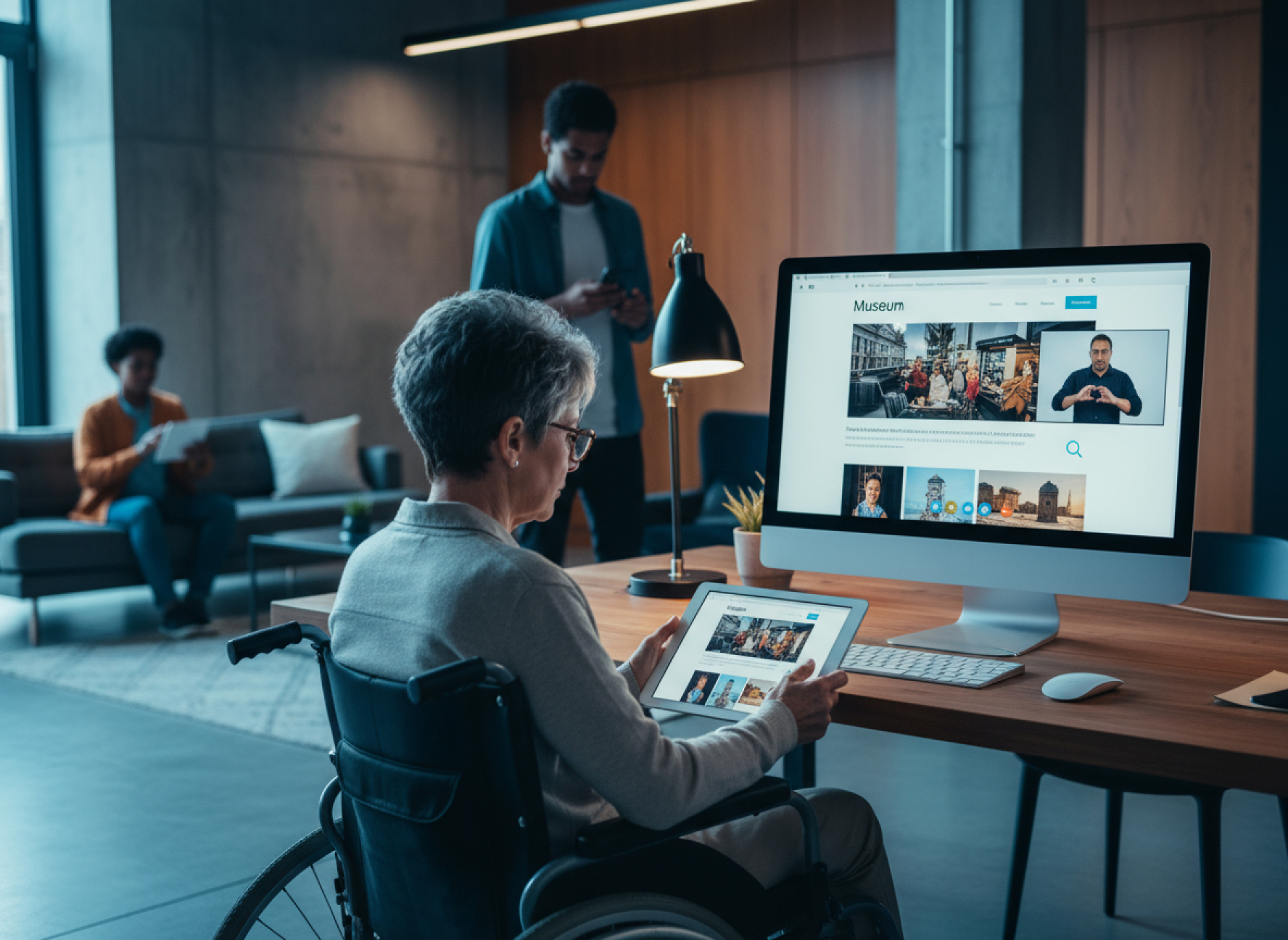
In our increasingly digital world, museums have expanded far beyond their physical walls. Museum websites now serve as crucial gateways to cultural heritage, providing information, virtual tours, educational resources, and online collections. However, these digital spaces can only fulfill their mission if they are truly accessible to everyone. This article explores why accessibility on museum websites isn't just a legal requirement—it's a fundamental responsibility that aligns with the core mission of museums to serve and educate the public.

Expanding the Museum's Reach
Museums exist to share knowledge, culture, and art with the public. When museum websites lack accessibility features, they effectively exclude millions of potential visitors. Consider these statistics:
Approximately 15% of the world's population lives with some form of disability
Over 2.2 billion people have a vision impairment
Around 466 million people worldwide have disabling hearing loss
Millions more have motor, cognitive, or neurological differences that affect how they interact with digital content
An inaccessible website means these individuals cannot access exhibition information, plan visits, enjoy online collections, or participate in virtual programs. By prioritizing digital accessibility, museums dramatically expand their reach and fulfill their mission to serve the entire public.
Legal and Ethical Obligations
Beyond the practical benefits, museums have both legal and ethical responsibilities to ensure accessibility:
Many countries have enacted laws requiring digital accessibility, such as the Americans with Disabilities Act (ADA) in the United States, the Equality Act in the UK, and the European Accessibility Act in the EU
Museums that receive public funding often have specific obligations to make their services accessible to all taxpayers.
As cultural institutions that champion inclusion and diversity, museums should lead by example in creating inclusive digital spaces.
Enhancing the Experience for Everyone
What many institutions fail to recognize is that accessibility improvements benefit all users, not just those with disabilities. Features originally designed for accessibility often improve the overall user experience:
Clear navigation and simplified layouts help everyone find information more easily
Video captions benefit people in noisy environments or those who prefer reading to listening
High-contrast text and resizable fonts improve readability for all users, especially on mobile devices
Voice navigation assists not only blind users but also visitors using the site while multitasking
Essential Accessibility Features for Museum Websites
PTo create truly inclusive digital spaces, museum websites should implement:
Screen reader compatibility: Proper HTML structure, alt text for images, and ARIA labels
Keyboard navigation: All functions accessible without a mouse
Captions and transcripts: For all audio and video content
Alternative text descriptions: Detailed descriptions of artwork and artifacts
Adjustable text and contrast: Options to modify text size and color contrast
Simple, consistent navigation: Clear pathways through the site
Language options: Content in multiple languages where possible
Reduced motion options: For users with vestibular disorders
Beyond Compliance: Toward True Inclusion
The most successful accessible museum websites go beyond mere technical compliance with standards. They embrace accessibility as part of their core values and involve people with disabilities in their design and testing processes.
This approach ensures that accessibility features actually meet real needs rather than just checking boxes on a compliance list.
Veevart Accessibility Feature
As part of its product, and in partnership with EqualWeb, Veevart has included accessibility to all its applications. The functionality allows for users to click on the widget which will enable the system to provide all the necessary assistance for users to complete their transaction.
To activate this important feature, please see our knowledge article. If you want to know more about this functionality, do not hesitate to reach out
Conclusion
As museums continue to expand their digital presence, accessibility must be a foundational consideration, not an afterthought. An accessible website isn't just about compliance—it's about fulfilling the museum's mission to share culture and knowledge with all people. By embracing digital accessibility, museums demonstrate their commitment to inclusion, expand their audience, and ensure that cultural heritage truly belongs to everyone. In a world where digital engagement with museums is increasingly the norm, accessibility isn't optional—it's essential.