The Journalist Who Learned to Lead: Jonathan Foerster on Curiosity, Community, and Building a Museum That Matters
Listen and subscribe to the full Cultural Animals: Museum Leadership Lab podcast at:
Watch on YouTube 
Apple Podcast
Spotify
Jonathan Foerster did not set out to run a children's museum. He set out to tell stories.
Growing up in Missouri, he was the kid who read everything he could get his hands on and wanted to turn around and share what he had learned with the world. That drive took him to the University of Missouri, one of the top journalism schools in the country, and eventually to a career covering stories for daily newspapers. But journalism changed, the business model cracked, and Jonathan found himself at a crossroads that a lot of purpose-driven professionals eventually face: how do you stay true to what you love when the industry built around it is shifting under your feet?
His answer was to follow the skill, not the job title. And that philosophy has shaped everything he has done since, including nearly doubling the membership at the Golisano Children's Museum of Naples.
Storytelling Is the Transferable Skill Nobody Talks About
When Jonathan left journalism in 2011, he did not leave storytelling. He just changed the audience and the intent.
"In journalism, I was telling a story to let people decide what they wanted to do with the information," he explains. "In nonprofits, I'm telling a story with a specific impact in mind."
That distinction matters more than it might seem. Most people think of fundraising as a financial function, something that lives in spreadsheets and grant applications. Jonathan reframes it as relationship-building at scale, and he credits his journalism background for giving him the foundation to do it well.
The skills that made him a good reporter turned out to be exactly the skills that make someone a great fundraiser: curiosity about what motivates people, the ability to parachute into an unfamiliar situation and learn fast, and the discipline to listen before you speak.
"Wanting to know why something works is much more important sometimes than knowing how it works," he says. "If you already know the answer, you stop being curious. You take things for granted."
He carried that mindset into his first fundraising role at a local humane society, where he had never technically raised a dollar before being hired to run communications and development. He describes it as close to "fake it till you make it," but not quite. The framework was there. He just had to go in, ask questions about everything, and trust the process.
It worked.
What Jonathan Learned About Why People Give
One of the biggest surprises in Jonathan's early fundraising career was how personal the act of giving actually is.
He had grown up in a household shaped by a minister father, where giving was part of the culture and the motivation felt obvious. He assumed everyone gave for the same basic reasons: they cared, they had the means, they wanted to do good.
That assumption did not survive contact with real donors.
"Some people want recognition. Some people want access to something. Some people want nobody to ever know they gave," he says. "It took me a while to understand that you have to learn each person and understand their motivation first, and then you ask them to give."
This is the part of fundraising that artificial intelligence cannot replicate. You can use technology to manage relationships, track touchpoints, and generate communications, but you cannot automate the moment when a donor tells you something vulnerable about why a cause matters to them. That moment requires presence, trust, and genuine human curiosity.
It is also why Jonathan pushes back on the idea of commission-based fundraising. He does not want fundraisers building relationships with donors on behalf of themselves. He wants those relationships to belong to the organization. The mission is the anchor, not the individual who happens to be making the ask this year.
The Membership Strategy That Worked Against Conventional Logic
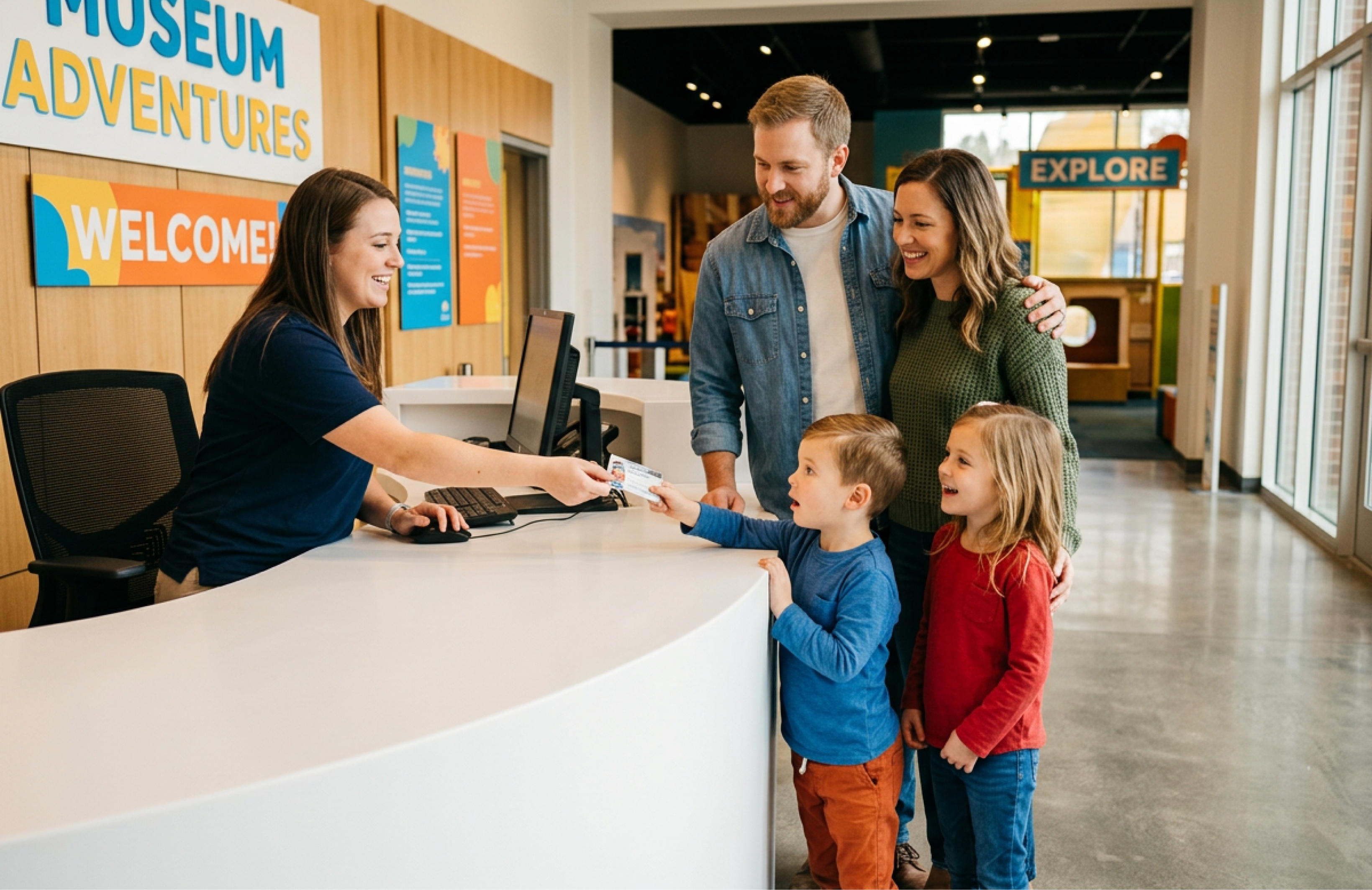
When Jonathan joined the Golisano Children's Museum of Naples in 2021, the museum was coming out of its Covid slump and beginning to find its footing again. By the time he had been there for a few years, they had nearly doubled their membership numbers.
What makes the story interesting is that they did it while raising prices.
The logic Jonathan used is worth understanding. He argues that pricing sends a signal about value, and that underpricing your product can actually undermine confidence in it. But he paired the price increase with something that might seem counterintuitive: a low-cost membership tier for families who qualify for food assistance.
The reasoning behind the two moves together is compelling. Making the museum accessible to all families signals that the institution believes everyone deserves to be there, that what happens inside those doors is genuinely important. And that sense of importance, that feeling that the museum is a necessity rather than a luxury, actually makes families who can pay full price more likely to want to be members.
"Being egalitarian about who should be in the museum makes the people who can afford the full price want to be part of it too," he says. "They feel like they can't miss out."
Membership growth also became a cultural commitment across the entire staff, not just a goal on a dashboard. Floor staff who were skilled at converting visitors into members were recognized and celebrated. The conversation never stopped.
For museums building this kind of connected visitor and membership experience, Veevart helps bring admissions, memberships, fundraising, and operations into one unified platform.
"We still make it part of the culture," Jonathan says. "We still highlight people who are good at selling memberships. They still get called out as being special and exceptional at their work."
The result is a museum where once someone walks through the door, the conversion rate to membership is strong. The challenge, as with most cultural institutions right now, is getting people through the door in the first place.
The Challenge Every Museum Director Is Talking About
Jonathan came back from the Children's Museum Association conference with a consistent message from colleagues across the country: attendance is soft.
He is careful not to be alarmist about it. He sees it as an economic signal more than a cultural one. Families are making tighter spending decisions, and cultural experiences, even beloved ones, sometimes fall into the discretionary column when budgets are squeezed.
"We think we're a necessity, but for some people we're a luxury item," he says. "You have to take that for what it is and constantly think about the value you're providing so that they feel it's as much a necessity as you do."
Naples is in a slightly different position than many communities because it continues to see population growth, including young families, and a rising birth rate. But the softness is still real. The post-Covid boom in attendance has leveled off, and museums everywhere are working to find new ways to stay relevant.
It's a challenge Adam Smith tackled head-on at Exploration Place — in Doubling Attendance: Marketing, Mission, and Museum Leadership, he explains how a shift to precise digital marketing and disciplined pricing helped double attendance in six years, even as marketing spend was cut in half.
For Jonathan, the answer is not augmented reality or digital immersion. It is almost the opposite.
"Kids don't touch screens at our museum. They play with actual things. That's very important to me and to the ethos of what we're doing," he says. "We're making them use their senses in a different way."
He is a believer that children's museums are positioned to become more important, not less, in the age of artificial intelligence. As more of life moves onto screens and as AI handles more of the cognitive tasks that used to require human attention, the ability to collaborate, communicate, relate to other people, and work through real-world challenges will become the premium skill set.
"The next great leaders in business are going to be people who know how to communicate directly with the people they're doing business with," he says. "People are going to give their money and their trust to the people they can relate to."
A children's museum, he argues, is where you build the foundation for that.
Future-Proofing the Business
One of the more significant bets Jonathan has made at the museum is the launch of an on-site preschool. Not everyone in the children's museum world loves this idea. Some see it as diluting the core product. Jonathan sees it as essential.
His argument is straightforward: the museum already does early learning. A preschool is just the formalized version of that work. And from a business standpoint, it solves a real operational problem.
Museum revenue is cyclical. Attendance spikes in season, dips in summer and fall, and fundraising tends to concentrate in the first and fourth quarters of the calendar year. A preschool generates steady, predictable monthly revenue that can smooth out those swings.
"We have to have multiple lines of revenue," he says. "Just like any other business. People stop thinking about nonprofits as businesses, and that's when nonprofits stop being successful."
He raised staff salaries early in his tenure and pushed the board to commit to it before he accepted the role. He frames talent retention the same way he frames membership: you have to earn people's commitment, and you have to back up your promises with substance.
In a market like Naples, where cost of living is high and competition for skilled workers comes from hospitals, hotels, restaurants, and local government, that is not a small commitment. But he believes it is non-negotiable.
What a Great Museum Should Do
Ask Jonathan about museums that have moved him and he lights up.
He mentions the Metropolitan Museum of Art for its sheer scope, the Los Angeles County Museum of Art for its new approach to organizing work by subject rather than period, and small local historical museums he has stumbled into while traveling that somehow taught him something that stuck.
But the experience he comes back to most powerfully is the National Museum of African American History and Culture in Washington, DC.
"You start at the bottom and work your way up through a mile and a half of history," he says. "It's so sad, so poignant, so inspiring, all at once. They did not hold anything back. They made you leave having real feelings about something you may have no personal experience with."
That, for Jonathan, is the standard. Not a checklist of interactive exhibits or a brand refresh. A museum should change the way you think about the world. It should give you real feelings and send you back out into your life with something you did not have when you walked in.
He is working to build that for every kid and every family that walks through the door in Naples.
"If a kid made a new friend, or learned something about the region they live in, or picked up a skill, that's a successful day for us," he says. "We're trying to be something that's impactful in the moment and builds impact for the future."
Curiosity got him here. Curiosity, he is pretty sure, is what keeps it going.