Website Accessibility: Protect Your Institution While Reaching More Constituents
In today's digital-first business environment, your website serves as the front door to your company. But have you considered whether that door is open to everyone? Website accessibility has moved from a "nice-to-have" feature to an essential business requirement—one with significant legal, financial, and ethical implications.
Understanding Website Accessibility
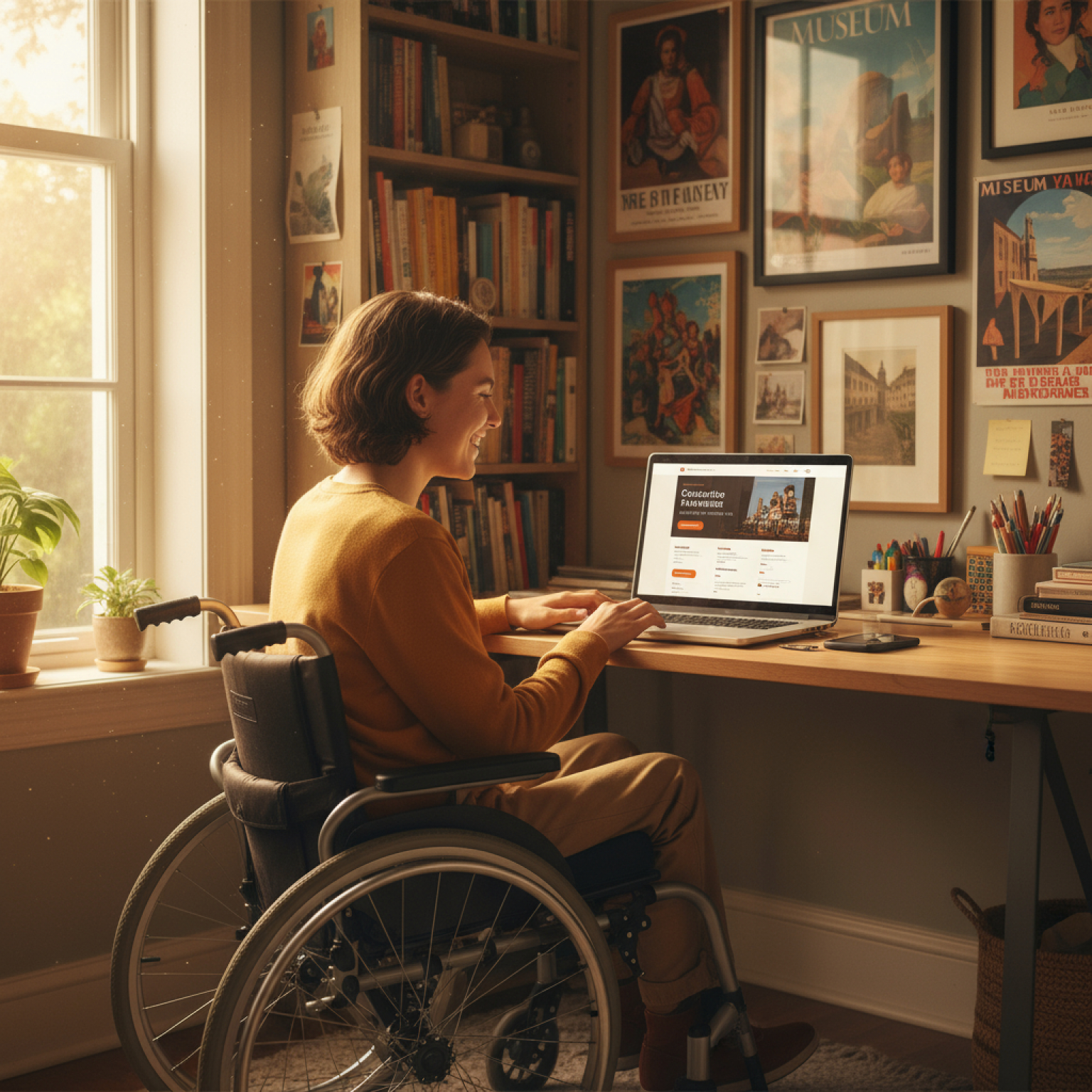
Website accessibility means designing and developing your website so that people with disabilities can perceive, understand, navigate, and interact with it effectively. This includes accommodations for visitors with:
Visual impairments (including color blindness and blindness)
Hearing impairments
Motor limitations
Cognitive disabilities
Seizure disorders
When your website is accessible, it provides equal access and equal opportunity to people with diverse abilities. This isn't just good ethics—it's good business and increasingly, it's the law.
The Legal Landscape is Shifting
The Americans with Disabilities Act (ADA) was enacted in 1990, long before the internet became central to commerce and daily life. However, courts have increasingly interpreted Title III of the ADA—which prohibits discrimination in "places of public accommodation"—to include websites.
This interpretation has led to a wave of legal action:
Web accessibility lawsuits have increased by over 300% since 2018
In 2023 alone, over 4,000 ADA web accessibility lawsuits were filed
Companies of all sizes are being targeted, not just major corporations
The average settlement costs between $10,000 and $50,000, not including legal fees
Some high-profile cases have resulted in settlements exceeding $100,000
These aren't isolated incidents. Law firms have begun specializing in identifying non-compliant websites and initiating legal action. Small and medium businesses are particularly vulnerable as they often lack the resources to defend against such lawsuits.
Beyond Legal Compliance: The Business Case for Accessibility
While avoiding litigation is a compelling reason to prioritize accessibility, the benefits extend far beyond legal protection:
1. Expand Your Market Reach
The disability market represents significant purchasing power:
61 million American adults (1 in 4) live with some type of disability
People with disabilities control approximately $490 billion in disposable income
Friends and family of people with disabilities represent an additional trillion-dollar market segment
By making your website accessible, you're not just complying with the law—you're opening your business to millions of potential customers who might otherwise take their business elsewhere.
2. Improve SEO and Overall User Experience
Many accessibility best practices align perfectly with search engine optimization:
Proper heading structure helps search engines understand your content
Alt text for images improves image search visibility
Clean code and improved site structure enhance crawlability
Faster page load times (often a byproduct of accessibility improvements) boost rankings
What's more, accessibility improvements typically enhance the user experience for everyone, not just those with disabilities. Clearer navigation, better readability, and more intuitive interfaces benefit all visitors.
3. Enhance Your Brand Reputation
In an era where consumers increasingly support businesses that demonstrate social responsibility, accessibility signals that your company values inclusion. This commitment can:
Differentiate your brand from competitors
Build loyalty among customers who share these values
Attract talent who want to work for inclusive organizations
Create positive press and social media opportunities
The Simple Solution: Implementing an Accessibility Widget
While comprehensive accessibility requires ongoing attention, an accessibility widget provides an immediate improvement and demonstrates your commitment to inclusion. These tools:
Allow users to adjust contrast, text size, and other display features
Enable keyboard navigation for those who cannot use a mouse
Provide screen reader compatibility
Support multiple language options
Generate an accessibility statement for your site
Implementation is straightforward, typically requiring just a simple script addition to your website code—something our team can help with in minutes.
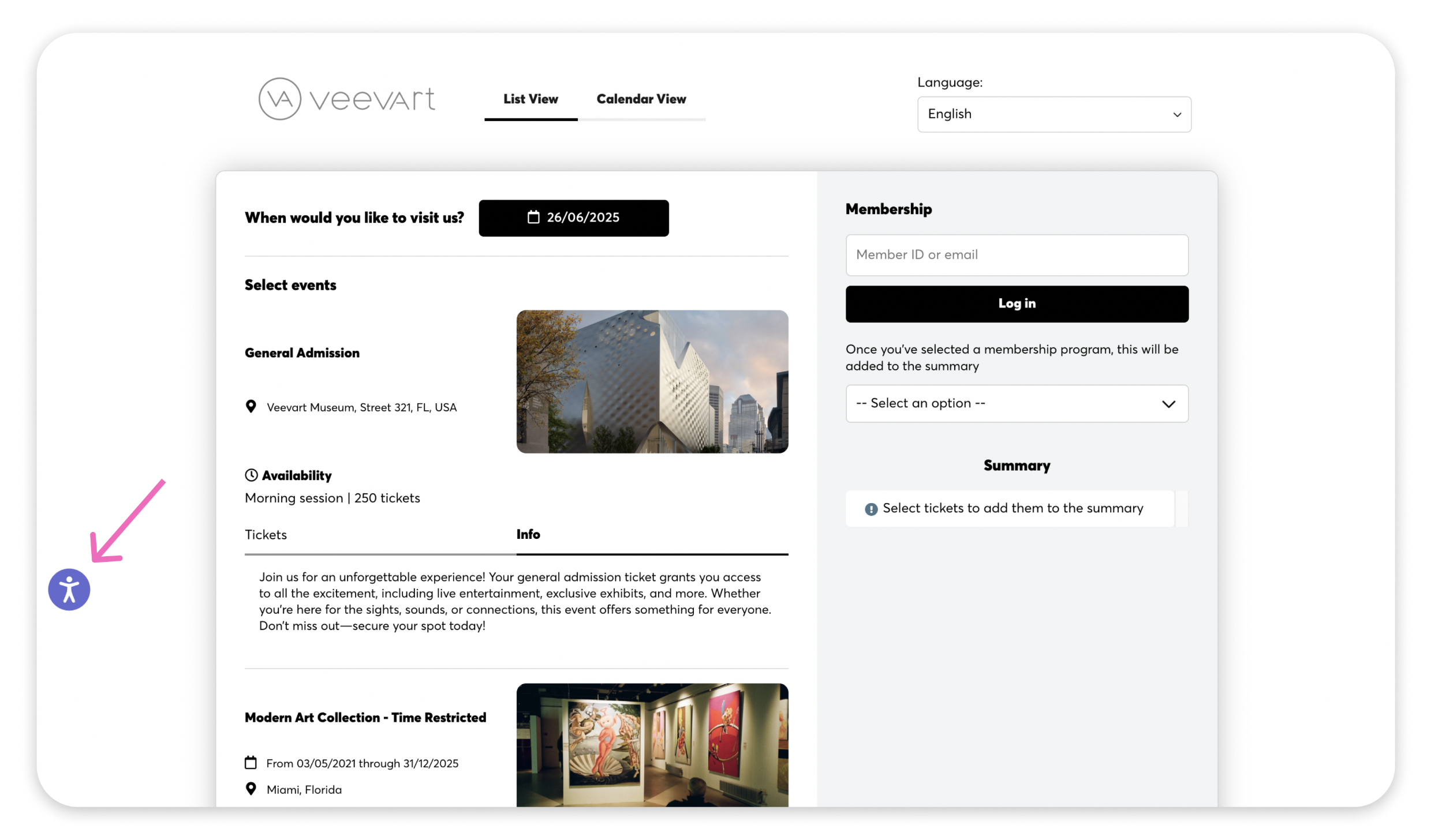
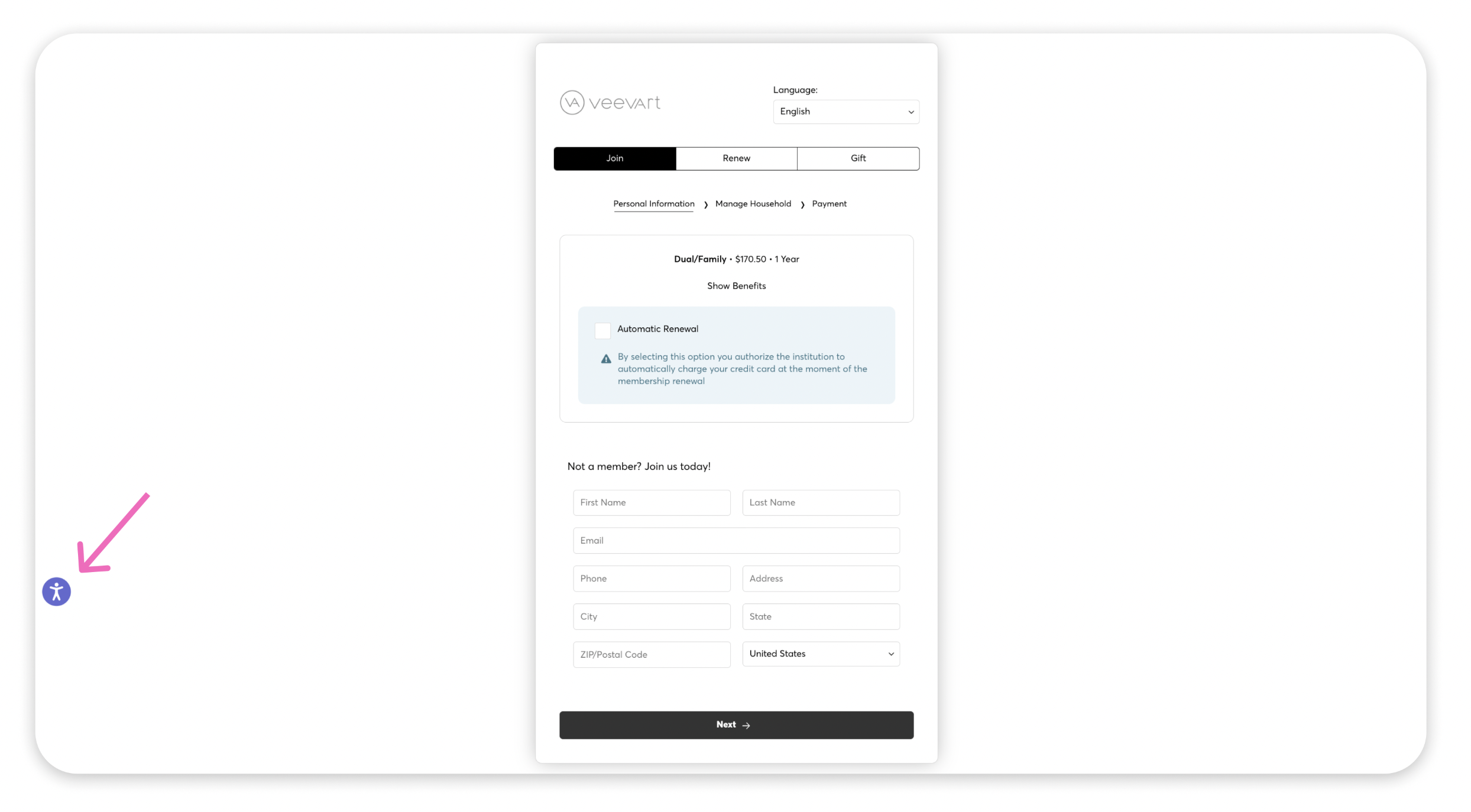
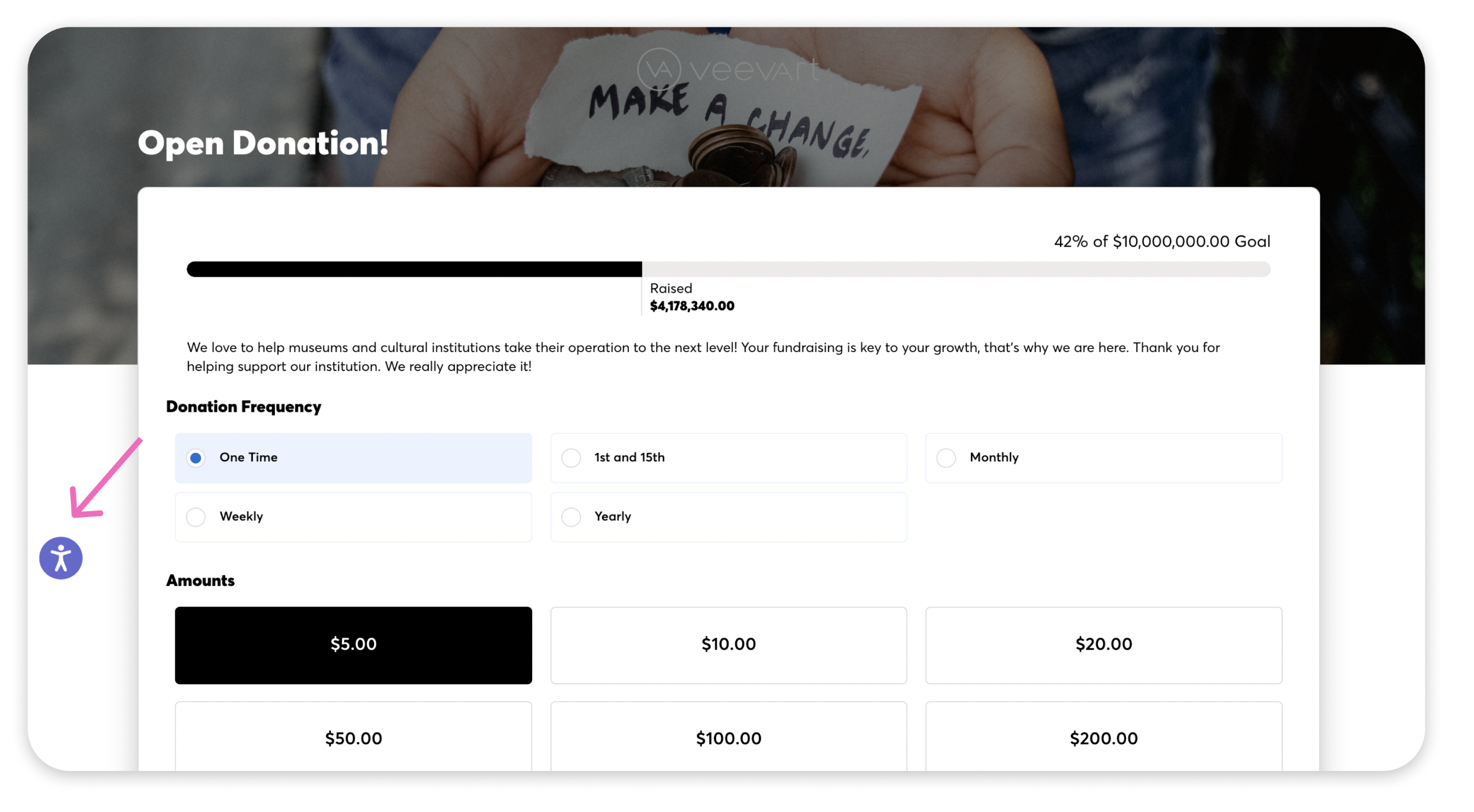
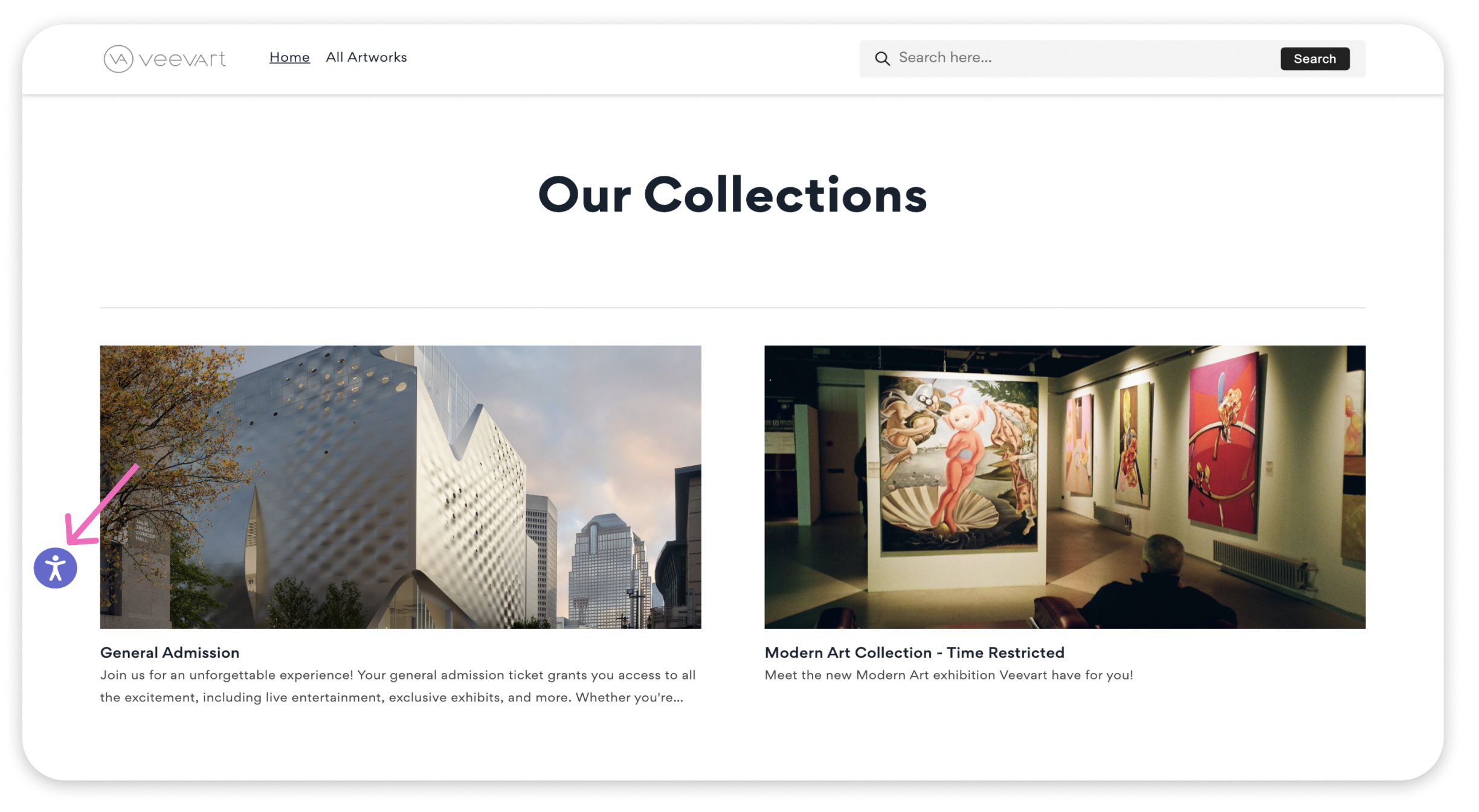
How it looks
The functionality is minimalist in its design. Here’s how it will look in the different Veevart Applications:
On the Ticketing App:
On the Membership App:
On the Donation App:
The Online Collection App:
Next Steps
Visit our article on how to enable this feature for your online apps. If you need additional support, please do not hesitate to reach out to your Account Executive.
Taking action now protects your business legally while opening your doors to the 61 million American adults with disabilities—a market with $490 billion in disposable income.
Website accessibility is no longer optional—it's an essential component of doing business online. By taking proactive steps now, you can protect your business from legal risk while simultaneously expanding your market reach, improving your user experience, and enhancing your brand reputation. Don't wait for a lawsuit to make accessibility a priority.