How Museums Can Use CRM to Turn Visitors Into Members Into Donors
Every major donor to your museum started as a stranger who bought a ticket.
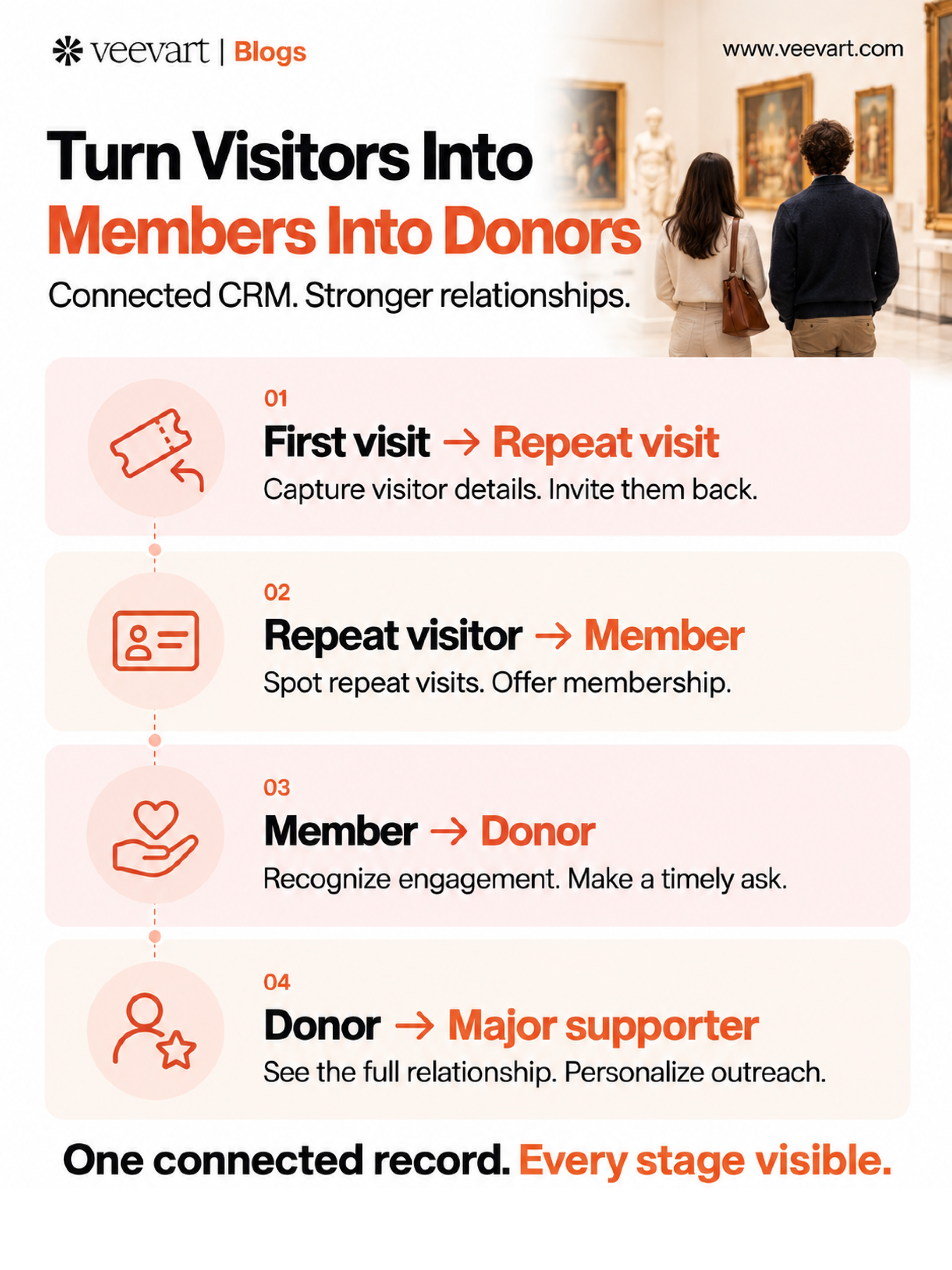
That's worth sitting with, because it reframes what fundraising and membership growth actually are. They aren't separate programs running in parallel. They're stages of a single journey: a first-time visitor becomes a repeat visitor, a repeat visitor becomes a member, a member becomes a donor, and a donor becomes a major supporter. The same person, moving through a relationship that deepens over years.
Most museums understand this journey in theory. Very few can see it happening in their own data. The visitor, the member, and the donor live in separate systems, so the institution can't watch someone move from one stage to the next, and it can't recognize the moments when a person is ready to move but hasn't been asked.
That recognition is the whole game. This is a guide to the conversion journey, stage by stage, and where connected CRM data makes each transition more likely to happen.
The Journey Is Real, Even When You Can't See It
The path from visitor to major donor is not a marketing abstraction. It's how supporter relationships actually develop at a cultural institution.
- A visitor comes once, has a good experience, and comes back
- A repeat visitor realizes they'd save money and feel more connected as a member, and joins
- A member deepens their engagement, attends programs, brings family, and starts to see the institution as theirs
- An engaged member is moved to give beyond membership, and becomes a donor
- A committed donor, cultivated well, becomes a major supporter
Each step is a threshold. And at each threshold, the person is more likely to cross it if the institution recognizes the moment and acts. The problem is that recognizing the moment requires seeing the person's whole history, and in most museums that history is scattered across systems that don't share it.
A CRM that connects the full journey doesn't create these transitions. It makes them visible, so the institution can act on them instead of missing them.
Stage One: First Visit to Repeat Visit
The journey can't start until someone comes back. The first goal isn't membership or giving. It's a second visit.
What moves a first-time visitor toward returning is partly the experience itself, which a CRM can't manufacture. But a CRM can help in a specific way: by capturing who the visitor is at the first visit, so the institution can reach them afterward. A ticket purchase that records nothing more than a transaction gives you no way to invite that person back. A ticket purchase that creates a visitor record gives you a relationship to build on.
The failure at this stage is quiet. The first-time visitor leaves, no record of them exists beyond a counted admission, and the institution has no way to encourage the return that would start the journey. (For more on the data the ticket generates, see Ticketing vs CRM: Why Museums Can't Afford to Keep Them Separate.)
Stage Two: Repeat Visitor to Member

This is the conversion that drives museum membership growth, and it's the one most often missed.
A visitor who has come three or four times in a year is behaviorally ready to become a member. They've demonstrated the exact pattern membership is built for. The only thing standing between them and joining is often that nobody asked at the right moment, because nobody could see the pattern.
This is where connected CRM data changes the outcome. When ticketing feeds the same system that manages membership, repeat visitors surface as membership prospects automatically. The institution can reach them with a targeted, well-timed invitation to join, right when their behavior says they're ready, instead of a generic appeal months later or no appeal at all.
The failure at this stage is the ready-to-join visitor who is never asked, because the system that knew they were ready couldn't tell the team responsible for asking. (This is covered in depth in Why Museum Membership Programs Stall.)
Stage Three: Member to Donor
Membership and giving are often run as separate programs by separate teams. But an engaged member is the warmest donor prospect a museum has, and the transition from member to donor is one of the most valuable in the entire journey.
The signals that a member is ready to give are visible in their behavior: rising visit frequency, program attendance, membership upgrades, sustained engagement over years. A member showing these signals has already demonstrated they value the institution. They're primed for a conversation about giving in a way a cold prospect never is.
Connected CRM data surfaces these members. When membership behavior and giving history live in the same system, the development team can see which members are engaged enough to be ready for a first ask, and time the conversation to the engagement rather than to the calendar.
The failure at this stage is the deeply engaged member who would have given if asked, but was never identified because their engagement lived in the membership system and the development team was looking only at the donor database.
Stage Four: Donor to Major Supporter
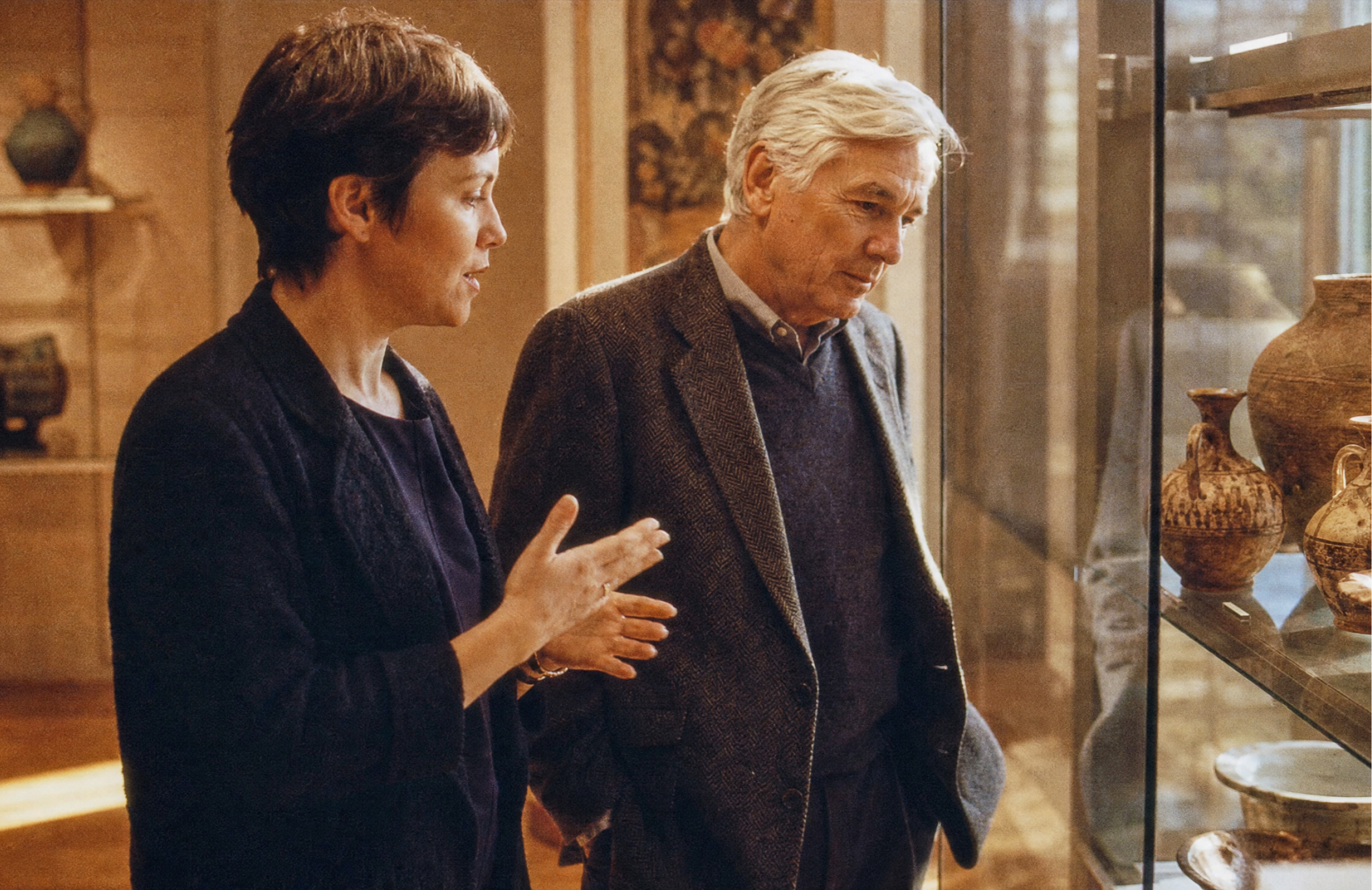
The final stage is cultivation: moving a donor from occasional gifts to significant, sustained support. This is the most relationship-intensive stage, and the one where the full picture matters most.
A gift officer cultivating a major gift needs more than giving history. They need to understand the whole relationship: how often this person visits, which programs they attend, what they care about, how their engagement has grown. That context is what makes an ask feel like an invitation into something the donor already loves, rather than a request from an institution that only contacts them when it wants money.
Connected data assembles that picture. When visit history, program engagement, membership behavior, and giving all live in one record, the gift officer walks into the conversation understanding the donor as a whole person, not a giving total. (See How Ticketing Data Can Drive Museum Fundraising] for how this reshapes the cultivation conversation.)
The failure at this stage is the cultivation that falls flat because it was built on giving history alone, blind to everything else that would have told the officer what this donor actually cares about.
Why the Funnel Leaks Without Connected Data
Step back and the pattern across all four stages is the same. At every transition, the person is often ready to move forward, and the move doesn't happen because the institution can't see the readiness.
The readiness is always visible in the data. The repeat visitor's pattern, the engaged member's behavior, the donor's interests, all of it exists. But when that data is scattered across ticketing, membership, and donor systems that don't connect, no one can see the whole journey, so no one can act at the moments that matter. The funnel leaks not because the supporters aren't there, but because the institution can't see them clearly enough to move them forward.
A connected CRM closes the leaks by making the whole journey visible in one place. It doesn't replace the human work of building relationships. It shows the team where to focus that work, and when.
From Funnel to Practice
Turning visitors into members into donors isn't a campaign you run. It's a capability you build, and the foundation of that capability is seeing each supporter's full relationship with the institution in one place.
With that in place, the practical work becomes clear:
- Capture every visitor as a record, so the journey can begin
- Surface repeat visitors as membership prospects, and ask them when they're ready
- Identify engaged members as giving prospects, and time the ask to their engagement
- Give development the full relationship picture, so cultivation reflects what each donor actually cares about
None of this requires a bigger team or budget. It requires that the data the institution already collects at every stage flows into one connected view, so the team can see the journey and act at the moments that move someone to the next stage.
Every major donor started as a stranger who bought a ticket. The institutions that grow membership and giving are the ones that can see that journey unfold, and step in at the right moment, every step of the way.
Veevart connects the full supporter journey in one platform, from first ticket to major gift, so your team can see who's ready to move to the next stage and act at the moment it matters. See how it works.