How to Use CRM Data to Personalize Visitor Communication
A member who visited last week gets an email that says "we miss you."
A first-time visitor gets the same renewal reminder as a ten-year member. A major donor receives the generic monthly newsletter with no acknowledgment of the gift they made three weeks ago. None of these are disasters. But each one sends the same quiet signal to the person receiving it: this institution doesn't actually know me.
That signal is the real cost of batch-and-blast communication. Not just that the generic email performs worse, though it does. It's that a mistimed or irrelevant message actively works against the relationship, at the exact moment communication is supposed to be strengthening it. The visitor learns that the museum sees them as a name on a list. Pretty cold.
Personalizing visitor communication can fix this instantly. And it doesn't require a bigger marketing team or a more sophisticated email tool. It requires connected data, and a shift in how the institution thinks about who it's writing to.
Why Museums Default to Batch-and-Blast
Almost no one chooses generic communication on purpose. Museums send the same message to everyone because segmentation is expensive and time consuming when the data isn't set up for it.
To send a member a message that reflects their actual relationship with the institution, you need to know that relationship: how often they visit, what they attend, when they joined, what they've given. When that information is scattered across disconnected ticketing, membership, and donor systems, assembling it for a targeted campaign becomes a manual project. So the institution defaults to the message it can send without the project. Which is the same message to everyone.
The batch-and-blast isn't a strategy. It's what happens when personalization costs too much. And the cost is almost always a data problem, not a marketing one.
What Personalization Actually Means
Personalization is not putting someone's first name at the top of an email. That's a mail-merge field, and visitors see through it instantly.
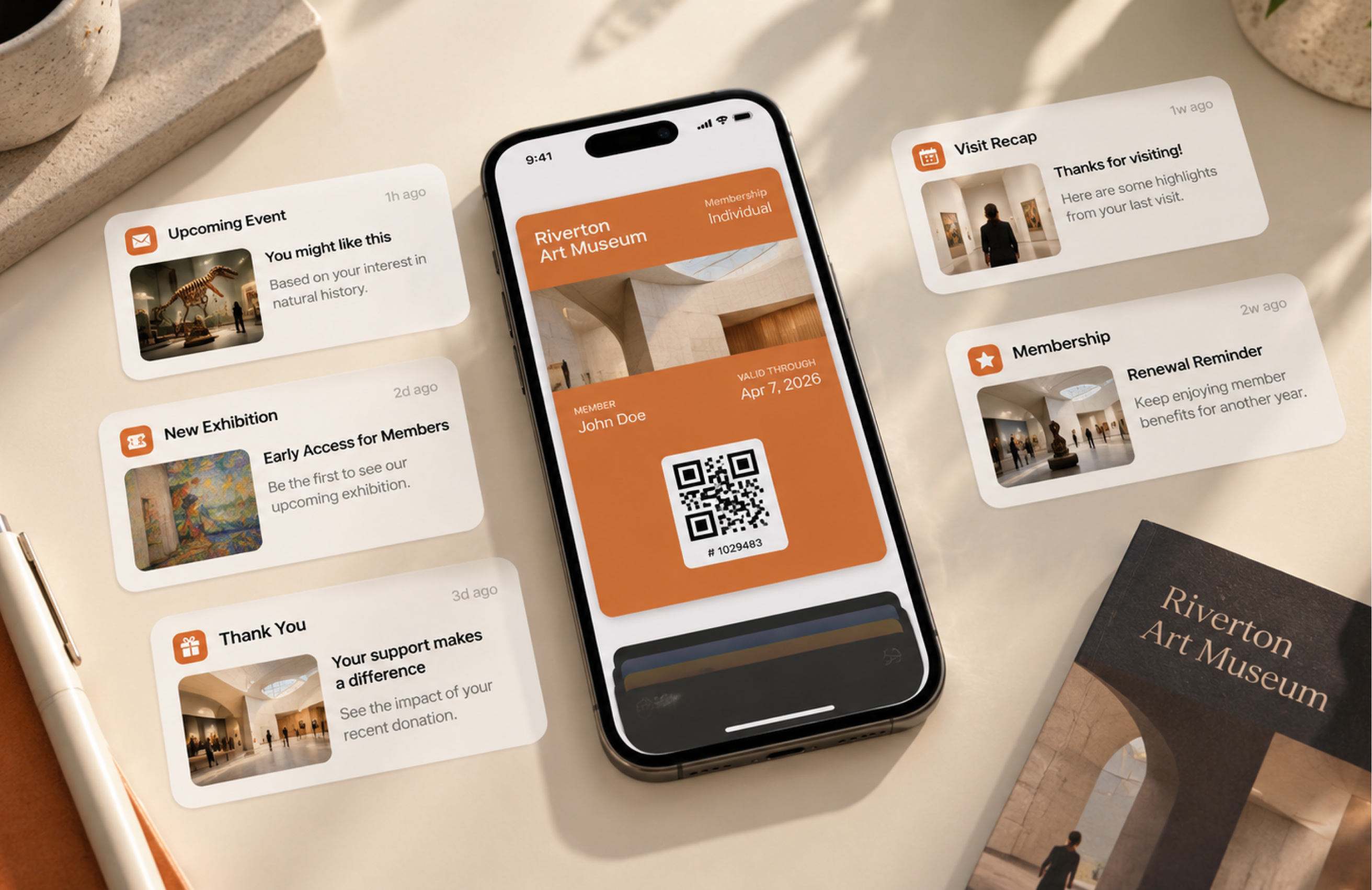
Real personalization means the content, timing, and ask reflect what the institution actually knows about the person:
- A renewal reminder that references the programs the member attended this year
- A membership invitation sent to a repeat visitor right after their third visit, not months later
- An event announcement targeted to the people whose history suggests they'd care about that specific event
- A donor acknowledgment that connects the gift to the work it supports
- A win-back message to a lapsing member that acknowledges the gap rather than pretending it isn't there
The common thread is relevance grounded in behavior. Each message reflects something true about the recipient's relationship with the institution. That's what makes it feel like recognition rather than marketing.
The Segments That Actually Matter
Effective segmentation for a museum isn't complicated. It follows the natural distinctions in how people relate to the institution. A handful of behavior-based segments does most of the work.
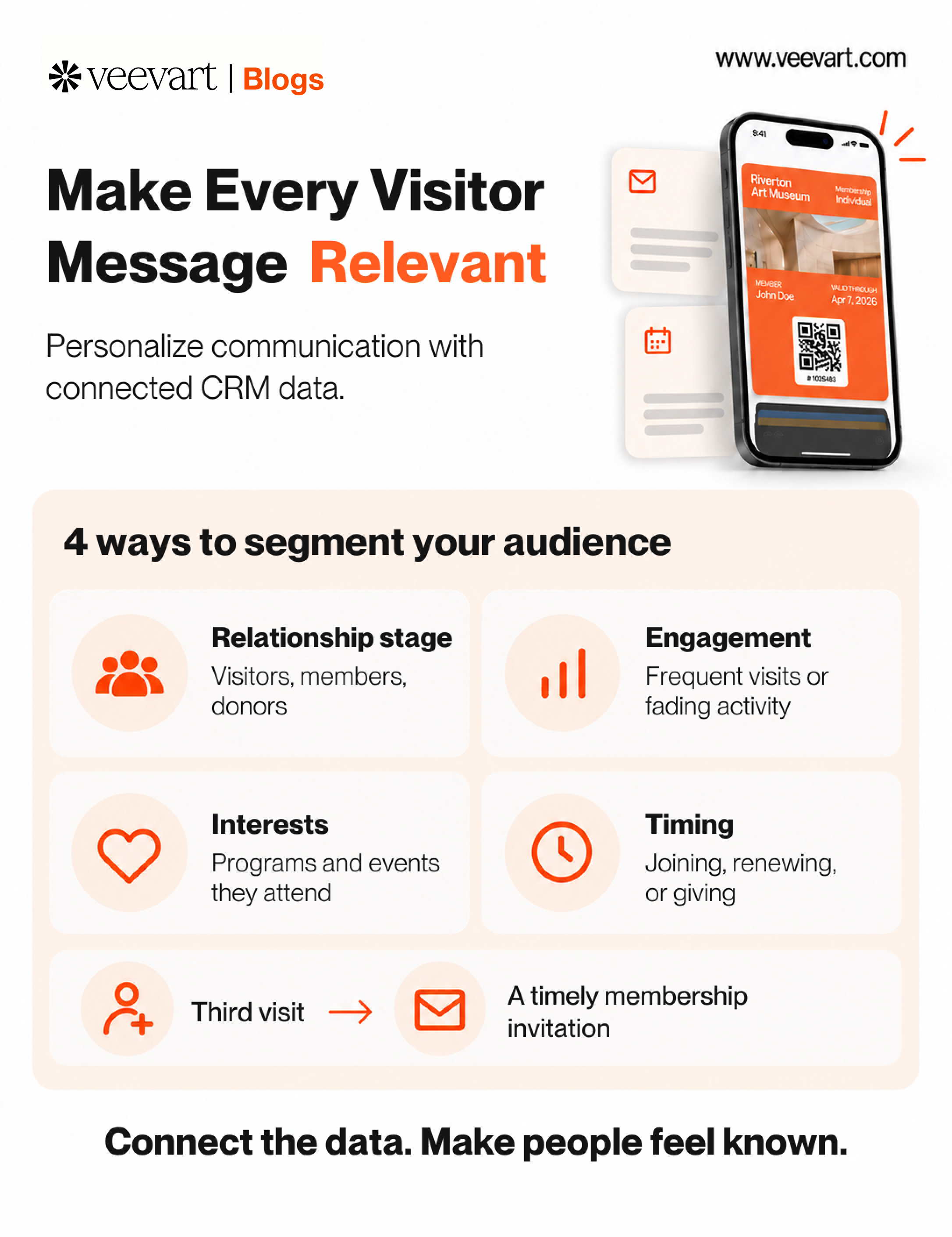
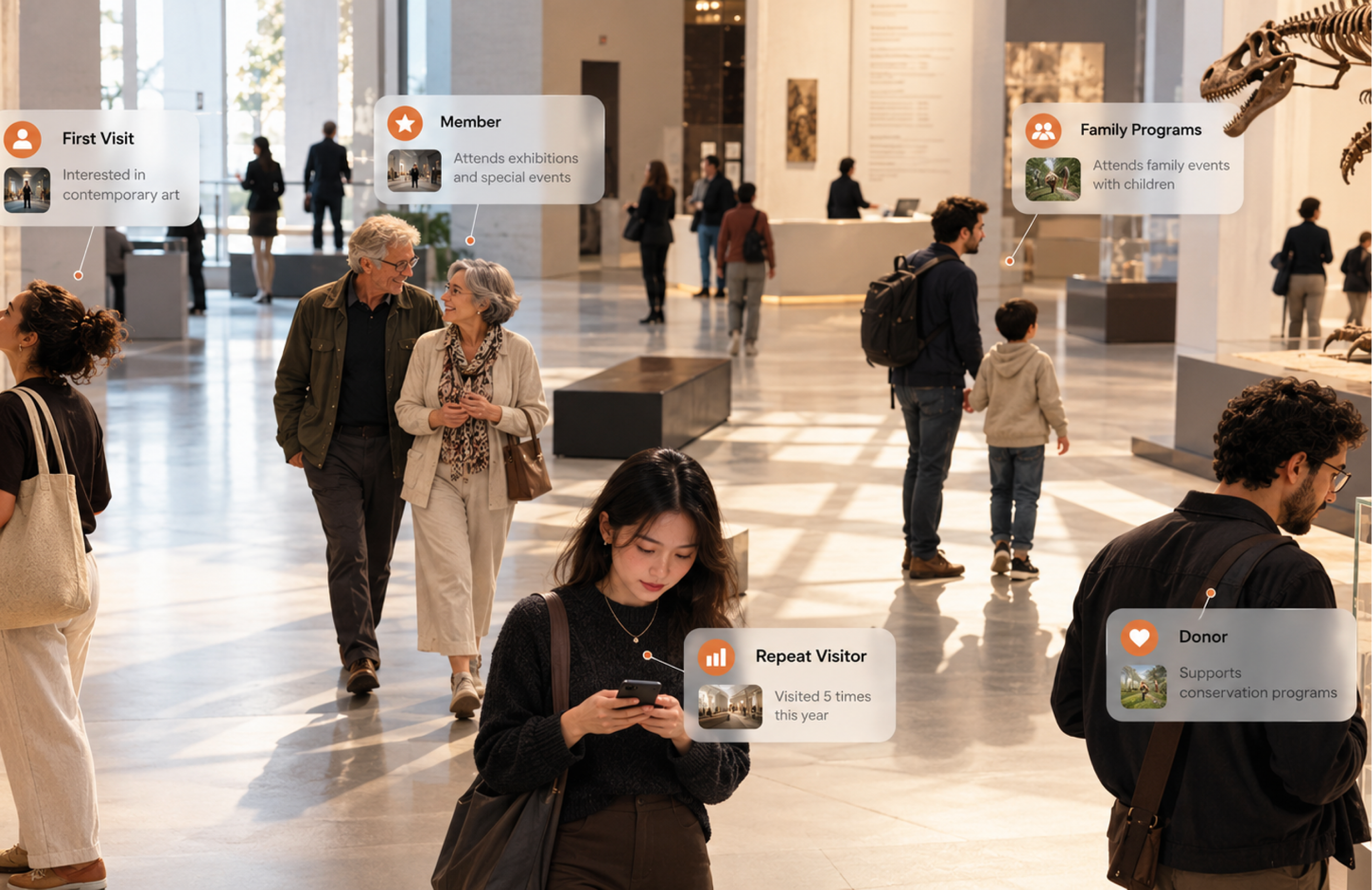
By relationship stage. First-time visitors, repeat visitors, members, donors, and lapsed members are fundamentally different audiences. The single most important segmentation is simply not treating these groups the same. A first-time visitor and a ten-year member should never receive identical communication.
By engagement level. Within members, the person who visits monthly and attends every program is different from the one who joined and never came back. High-engagement and low-engagement members need different messages, especially at renewal time.
By interest. A visitor who attends every conservation program and one who comes only for family events care about different things. Behavior reveals interest, and interest should shape what you send.
By lifecycle moment. Someone who just joined, someone approaching renewal, someone who just lapsed, and someone who just made a first gift are each at a specific moment that calls for a specific message. Timing communication to these moments is one of the highest-return forms of personalization there is.
None of these segments require guesswork. They're all visible in behavior, if the behavioral data is connected in one place.
Why This Depends on Connected Data
Every example above shares a requirement, and it's the thing that determines whether personalization is possible at all.
To communicate based on behavior, the institution has to be able to see behavior, across the whole relationship. In one place. The member's visit history, program attendance, giving, and membership status all have to live where the communication is built. When it does, segmentation is a filter you apply, and a targeted campaign takes minutes. When they're scattered across systems that are not connected, segmentation is a manual project, and the institution falls back to batch-and-blast because that's all it can afford to do.
This is why personalization is fundamentally a data question, not a marketing one. The best email tool in the world can't personalize based on data it can't reach. (For more on why connected data changes what an institution can do, see How Museums Can Turn Everyday Visitor Data into Strategic Insight.)
When the data is connected, the same modest marketing team that was sending one generic newsletter can send ten targeted messages, each relevant to its audience, with no more effort than the one generic send used to take.
The Payoff, and the Trend Behind It
Personalized communication performs better on every metric that matters: open rates, click rates, conversion, renewal, and giving. That's well established. But the deeper reason to make the shift has to do with what visitors now expect.
People are used to highly relevant communication from the organizations they interact with every day. Streaming services and favorite shops have quietly raised the bar for everyone.A generic, mistimed message doesn't just underperform anymore. It reads as evidence that the institution isn't paying attention. Among the clearest visitor engagement trends of recent years is that relevance has shifted from a nice touch to a baseline expectation. (This shift in expectations is explored in What Museum Visitors Expect Today.)
Meeting that expectation is within reach for any museum. It doesn't take a bigger budget or a marketing overhaul. It takes connected data and the willingness to stop sending everyone the same thing.
Where to Start - Beginners Guide
You don't have to build a sophisticated personalization engine to make a meaningful difference. Start with the highest-return move, which is almost always segmenting by relationship stage.
Stop sending first-time visitors, members, and lapsed members the same messages. Just that one change, treating those groups as the distinct audiences they are, will improve both the results and the way people experience your communication. From there, layer-in the engagement and interest as the connected data makes them visible.
The goal isn't perfect personalization. It's to stop sending the message that says "we don't know you" to the people you most need to feel known. Every message that reflects a real relationship is a small deposit in that relationship. Every generic blast is a small withdrawal. Over a year of that type of communication can add up quickly.
Veevart connects visit history, membership, programs, and giving in one platform, so your team can segment and personalize communication based on what each person actually does, without a manual project behind every send. See how it works.